

The emergence of banking systems played a crucial role in the development of the global economy. Banking has always been a profitable industry, and in the 19th century, the largest bank in Brooklyn was the Williamsburg Savings Bank. However, for Brooklynites, this institution is remembered for more than just its financial impact. Read more at brooklyn1.one.
A Unique Architectural Marvel
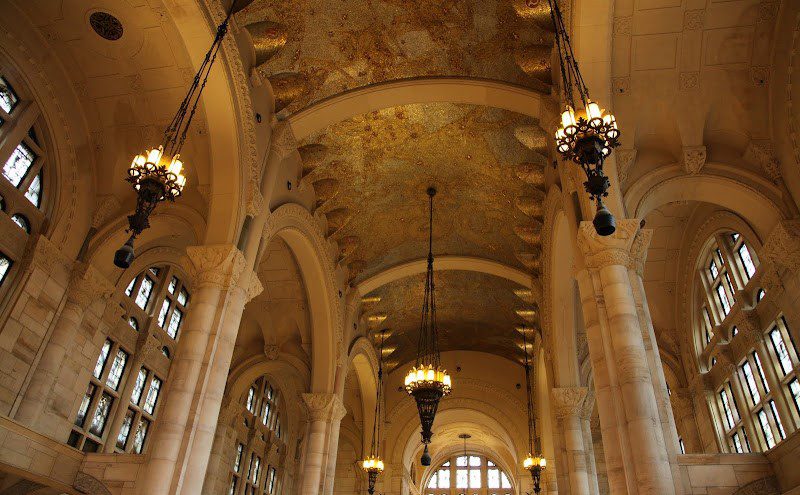
The main building of the bank was located at Broadway and Driggs Avenue in Williamsburg. Designed by George B. Post and architect Robert Helmer, the building was crowned with a massive dome that made it stand out among Brooklyn’s lower structures. Even in the 21st century, the bank is still referred to as Brooklyn’s skyscraper.
The bank officially opened in 1875, though construction continued even after it started operating. One of its most famous features, the tower, was completed in 1929, near the Atlantic Terminal.
Due to its distinctive design and historical significance, the bank building was designated a New York City Landmark in 1977. During the late 19th and early 20th centuries, architects and builders competed to create the most iconic structures, and this rivalry led to some of Brooklyn’s most unique buildings.
The Williamsburg Savings Bank was not only remarkable on the outside but also magnificent inside. The interior decor was dominated by the Art Deco style, featuring:
- Grand Byzantine columns
- Intricate mosaic floors and ceilings
- Stunning bas-reliefs
- Ornate iron window grilles
- Impressive chandeliers and lighting fixtures
After the bank relocated, the building was used for various purposes, including financial offices and dental clinics. By the 2000s, it was converted into luxury apartments, accessible only to Brooklyn’s wealthiest residents. The former bank hall now serves as a venue for weddings and formal ceremonies.
Humble Beginnings

Before moving to its landmark building, the bank operated from a church basement at Bedford Avenue and South 3rd Street. The Williamsburg Savings Bank was officially founded in 1851, starting with only 158 depositors. However, within just a year, the bank earned enough to move into a more permanent location across from the modest church basement.
At the time, Williamsburg was an independent city. When it was incorporated into Brooklyn in 1852, the bank decided to keep its original name.
Thanks to strategic financial management, the bank’s first year of operations generated enough profit to cover land rent for the next seven years. The Civil War further boosted the bank’s assets, bringing in thousands of new clients. By 1867, the bank had over 16,000 depositors, with total deposits reaching $5 million—an enormous sum for the time.
Within 60 years, the number of depositors had grown to almost 140,000, making it the fourth-largest bank in the United States. This rapid growth created a need for expansion, as the original headquarters became too small. By 1928, the bank’s headquarters was still housed in the dome section of the main building.
Overcoming Legal Restrictions
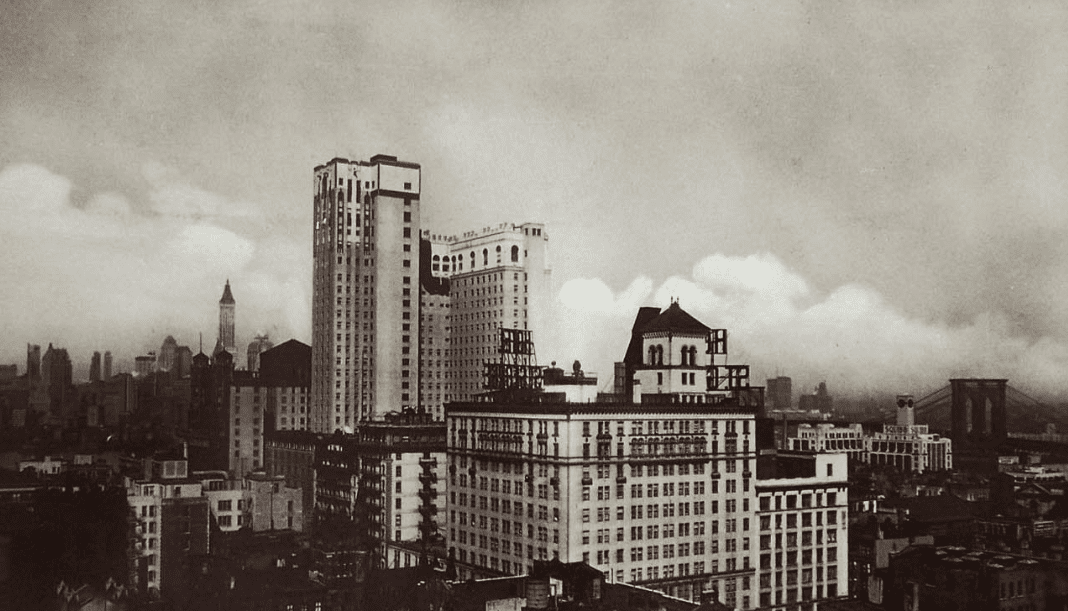
Until 1923, a New York law prohibited banks from opening multiple branches. Each savings bank was allowed to operate only from a single building, which created significant challenges. Banks had to continuously expand or make the most of limited space, often cramming administrative offices into tiny rooms.
After 1923, the Williamsburg Savings Bank finally gained the right to open additional branches. It quickly established two major locations:
- Flatbush Avenue
- Atlantic Avenue
By 1927, the bank began actively opening new branches, while still maintaining its original Broadway location as an operational branch. The new headquarters was moved to Hanson Place.
Rapid Expansion and Mergers
The bank’s growth continued, and by 1948, it was building branches in Bay Ridge and New Lots Avenue. The expansion spread beyond Brooklyn, with a notable branch in Suffolk County on Long Island.
Despite its strength and financial stability, the Williamsburg Savings Bank could not withstand the wave of banking consolidations. In 1986, it was acquired by the Republic National Bank. Later, in 1999, Republic National itself was purchased by HSBC Bank USA, marking the end of an era for Brooklyn’s first major financial institution.