

For those unfamiliar with climatology, it may seem that climate is a fixed concept—the equator is always hot, and the poles are always cold. For non-scientists, a few degrees of fluctuation may seem insignificant. However, for climate scientists, even a slight temperature shift can signal the onset of catastrophic changes. Mark Cane is one such scientist who has made a significant contribution to the field of climatology. Read more at brooklyn1.one.
A Public School Education
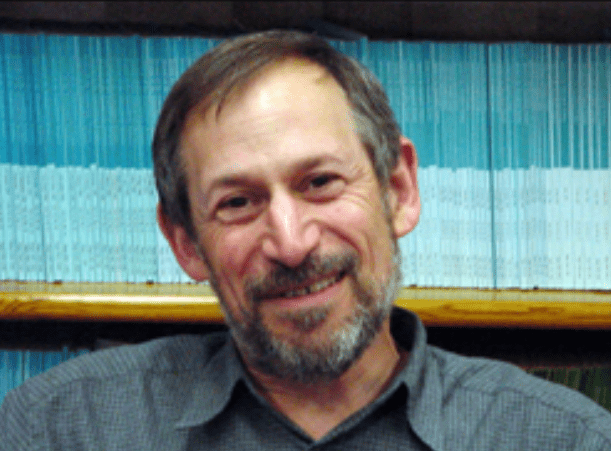
Mark Cane was born in 1944 and attended Midwood High School on Bedford Avenue in Brooklyn. Midwood is a highly selective public school, and local residents often compare getting into Midwood to being accepted into an Ivy League institution. Even during his high school years, Cane showed a strong interest in science and mathematics.
After finishing high school, he moved to Boston to pursue his academic journey. In 1965, he graduated from Harvard University, one of the nation’s most prestigious institutions, with a degree in Applied Mathematics. In 1975, he earned his Ph.D. in Meteorology. The following year, he returned to New York to teach at Columbia University, where he has dedicated most of his career. Over the years, he has authored more than 250 scientific papers and one book.
El Niño – A Lifelong Scientific Passion
Cane’s primary research focus has been El Niño. The El Niño-Southern Oscillation (ENSO) is a temperature fluctuation in the Pacific Ocean that has far-reaching effects on global climate patterns. Even minor shifts in ocean surface temperatures can lead to severe consequences, including droughts, economic crises, and even wars.
El Niño is primarily concentrated in the eastern Pacific near Peru. However, its effects can ripple across the entire planet, impacting agriculture, economies, and public health. Because of this, Cane also became an oceanographer, as understanding ocean currents was crucial to his climate research. Many New York-born scientists have followed similar paths, bridging the gap between meteorology and oceanography.
Predicting Climate Patterns
One of the most remarkable aspects of El Niño is its cyclic nature—it tends to reoccur every 3 to 7 years. However, scientists have struggled to determine the exact frequency and magnitude of its effects.
In the 1980s, Mark Cane and his colleagues became the first scientists to develop a model capable of predicting El Niño’s behavior. By 1985, their model was scientifically validated.
Beyond just forecasting, Cane’s work has focused on understanding El Niño’s impact on global society. He has researched how temperature fluctuations in the Pacific Ocean affect agriculture, economies, public health, and even global politics. His studies have shown that climate variability can indirectly trigger wars and conflicts around the world.
Cane was the first scientist to demonstrate the deep connection between climate and human civilization. His groundbreaking research led to the creation of the International Research Institute for Climate and Society (IRI).
His El Niño model predicted that the likelihood of an El Niño event in 2023 was 90%, though with moderate intensity. Typically, El Niño lasts between 9 to 12 months, which is enough time to severely impact regions such as Central and South America, Indonesia, South Asia, and Australia.
Exploring Paleoclimate – The Climate of the Past
Alongside El Niño research, Cane developed an interest in paleoclimatology, the study of ancient climates. His goal was to analyze how the early climate of Earth influenced modern-day conditions.
Paleoclimatologists investigate how climate has changed over millions of years due to various natural forces. By studying past climate shifts, scientists attempt to predict what may happen in the future. Cane’s research contributes to global efforts to forecast climate trends, helping humanity prepare for potential environmental challenges.
In the 21st century, the ability to accurately predict climate patterns is critical for developing strategies to mitigate natural disasters and climate-related crises. Cane’s work ensures that the world is better equipped to handle the unpredictable forces of nature.