

The industrial past of every city is unique. In New York, ports played a significant role in shaping the city. However, as development progressed, each borough established its own factories and manufacturing hubs, striving to push beyond its limits.
One of Brooklyn’s largest factories was located in Williamsburg. The Domino Sugar Refinery was the heart of sugar production in the United States. Read more at brooklyn1.one.
Bigger Than the Rest
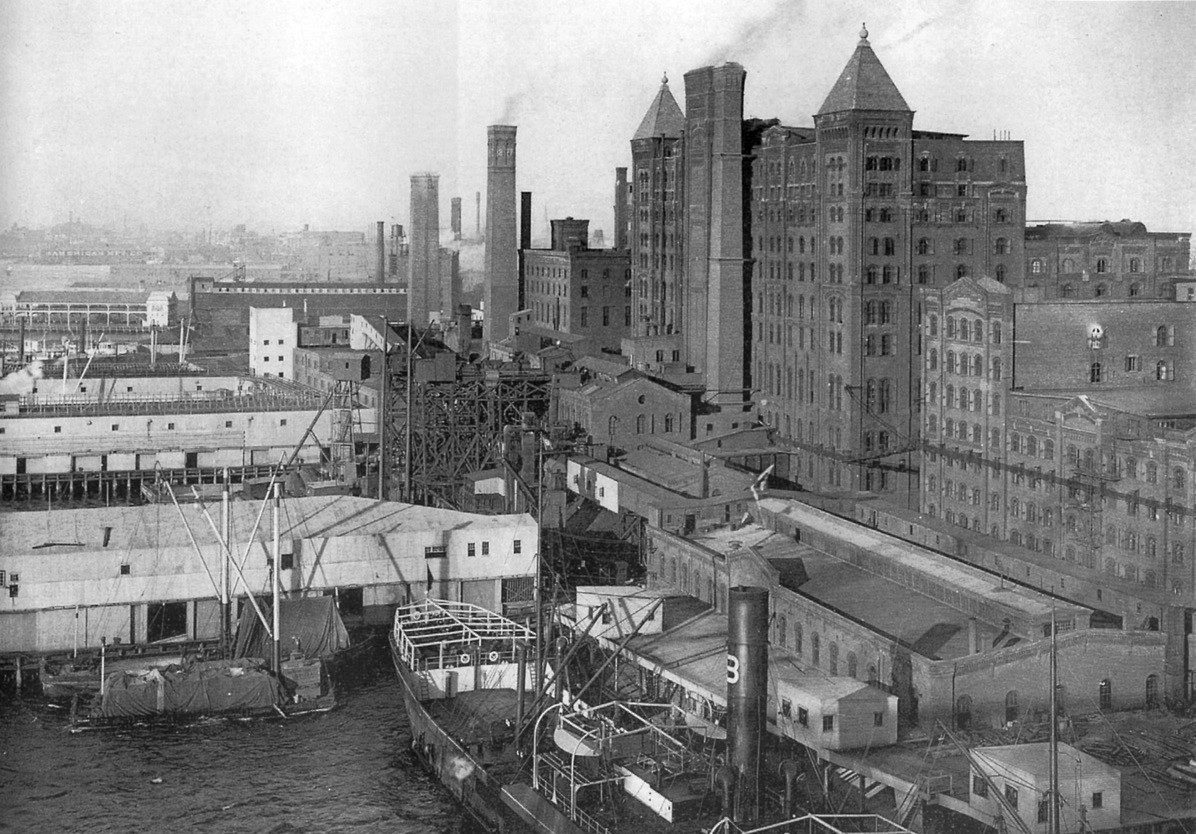
In the 1860s, the American Civil War erupted, deeply affecting the country’s economy and industry. Once the war ended, several sectors saw rapid advancements. The food industry experienced a breakthrough that helped New York enter the global market, with the Domino Sugar Refinery becoming one of the largest sugar manufacturers in the world.
The refinery was built in the 1850s by industrial tycoon Henry Havemeyer. However, even before its construction, the Havemeyer family had been engaged in sugar production on the site. Over time, they expanded their family business across the city.
The refinery’s architecture was monumental—it loomed over Brooklyn’s small residential homes, covering an impressive 3 million square feet.
Within a few years of opening, the factory employed over 4,000 workers and processed an astounding 3 million pounds of sugar per day.
The Recipe for Success
Unlike some other sugar producers, Domino did not own its own cane plantations. Instead, raw materials were delivered by contracted ships. The strategic location of New York significantly contributed to the refinery’s success, as this method allowed the company to purchase high-quality raw materials at competitive prices.
By the 1870s, Brooklyn was responsible for producing half of all the sugar in the United States.
The refinery workers labored tirelessly. The work was physically demanding, as there were no modern machines or automated production lines at the time.
Unfortunately, in 1882, a fire destroyed the original building. On the one hand, this was a historic loss, as the old structure could have become a significant landmark. On the other hand, the fire led to the construction of a new building, which survived into the 21st century.
The new facility further expanded the company’s production capacity. By the early 1900s, the refinery was renamed Domino Sugar, while the business remained under Henry Havemeyer’s leadership.
Domino was never indifferent to historical events. The refinery survived the Civil War and two World Wars.
However, during World War I, the factory experienced a tragic explosion. The yellow press of the time blamed German forces, calling it an act of sabotage. Several workers lost their lives, and part of the factory caught fire. Domino never hid the fact that it was producing sugar for the Allied forces.
Unfortunately, as global industry advanced, Domino’s dominance started to fade. The refinery struggled to modernize its facilities due to financial difficulties, making it hard to compete. By 1999, the company could no longer afford to pay its employees, leading to a massive labor strike that lasted nearly two years.
In 2004, the factory permanently shut down, extinguishing its furnaces and stopping its machines forever.
A New Life
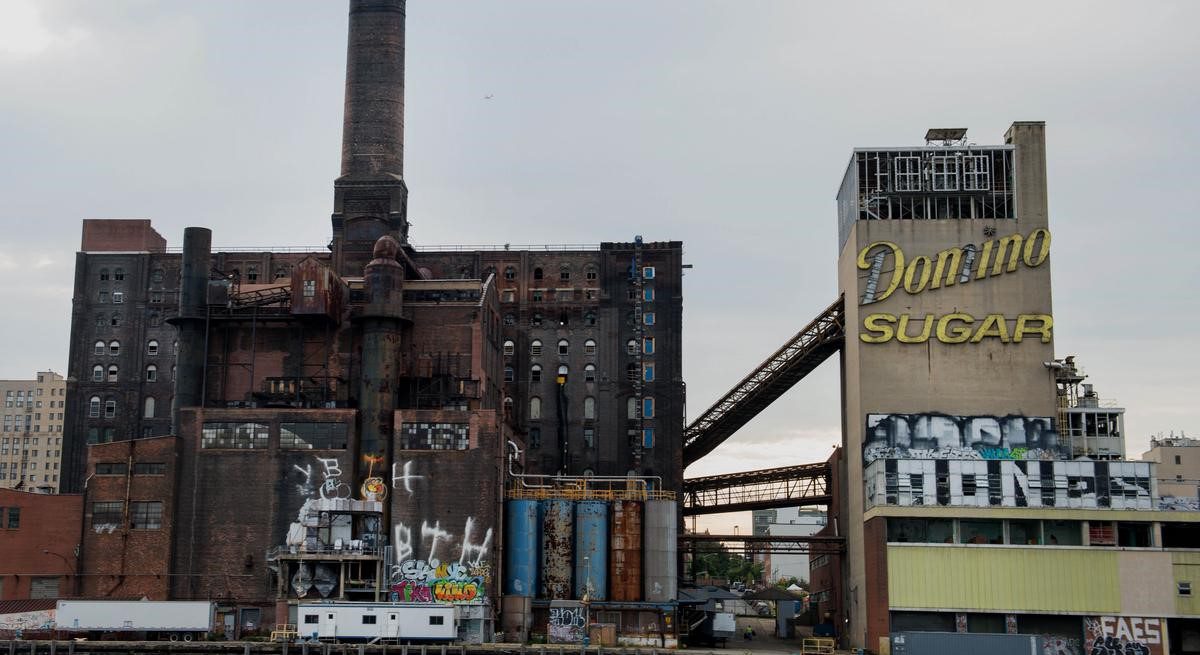
For years, the refinery building stood abandoned. Street artists covered its walls with graffiti, while urban explorers roamed its empty corridors.
However, things changed when the industrial style became fashionable, and New York developers began eyeing the historic structure, breathing new life into it.
The redevelopment project was led by Two Trees Management, who took on the massive challenge of converting an industrial relic into a livable space.
The refinery complex consisted of several buildings. The main structure was transformed into office spaces and retail stores. The developers preserved its historical exterior, maintaining its rough brickwork and round windows. While the outside remained unchanged, the interior was modernized for contemporary use.
The other buildings of the refinery were converted into residential apartments. To enhance the appeal of the location and attract buyers, a public park was created next to the old factory, making the area accessible to all.