

Brooklyn Technical High School is a recognized leader in science, technology, engineering, and mathematics (STEM). Despite budget constraints, the administration, faculty, and the Alumni Foundation continue to support and enhance the quality of education, preparing future technical professionals. Read more about the school’s long and fascinating history at brooklyn1.one.
The Need for a Technical Workforce
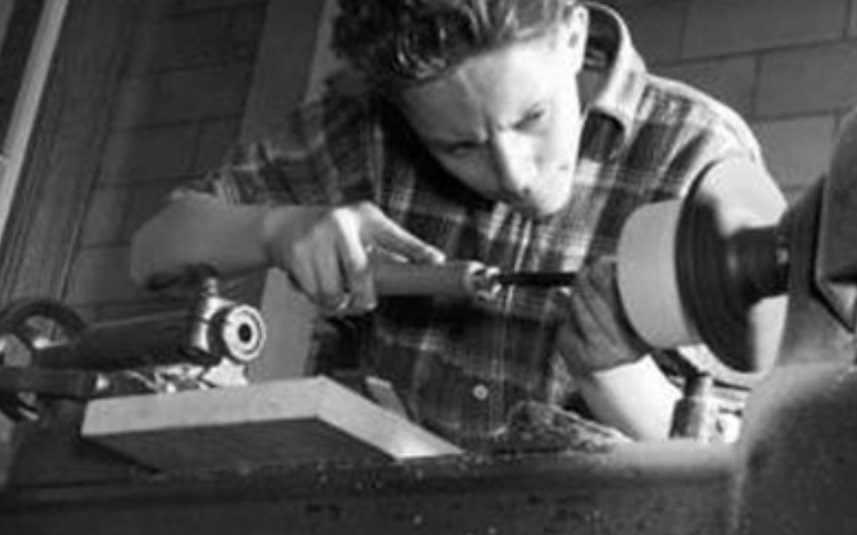
The driving force behind the creation of Brooklyn Technical High School (BTHS) was Dr. Albert L. Colston, head of the mathematics department at Manual Training High School. Following World War I, the country faced a growing demand for a skilled technical workforce. Colston presented a proposal to the Brooklyn Engineers’ Club, recommending the establishment of a technical high school program for Brooklyn boys. His idea was approved and initially implemented at Manual Training High School in 1919. By the spring of 1922, the Board of Education formally authorized the founding of Brooklyn Technical High School, which opened that fall.
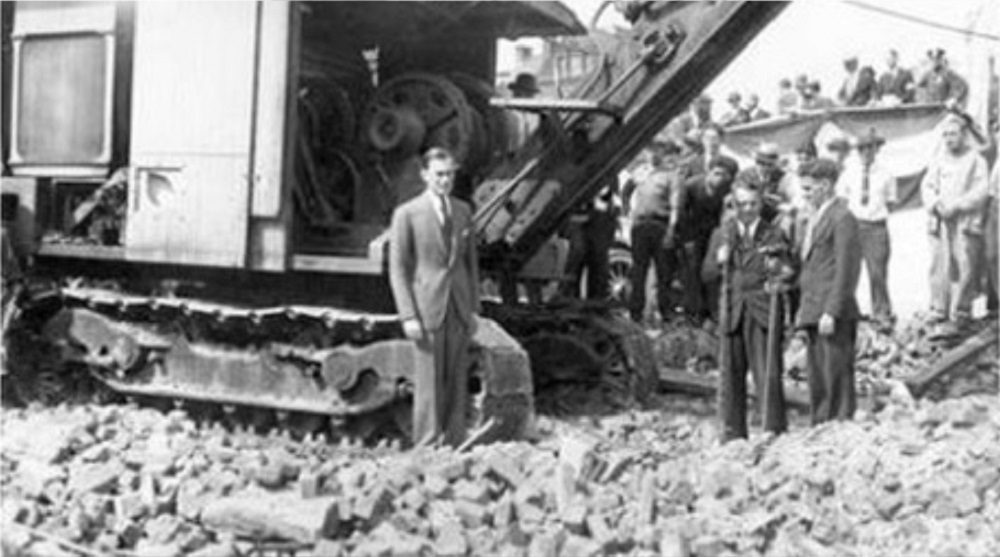
The program’s success was evident from the start. With an initial enrollment of over 2,400 students, the school quickly needed additional space, leading to expansions into several other buildings. As demand for technical education grew and Dr. Colston’s curriculum proved highly effective, plans were drawn up for a large new building to house BTHS. After receiving Board of Education approval in 1927, the land was acquired, and on September 17, 1930, New York City Mayor Jimmy Walker presided over the groundbreaking ceremony. The $6 million building was partially ready for occupancy by the fall of 1933, though the original and annexed structures remained in use for several more years. The first students in the new facility were 800 freshmen enrolled in electrical engineering.
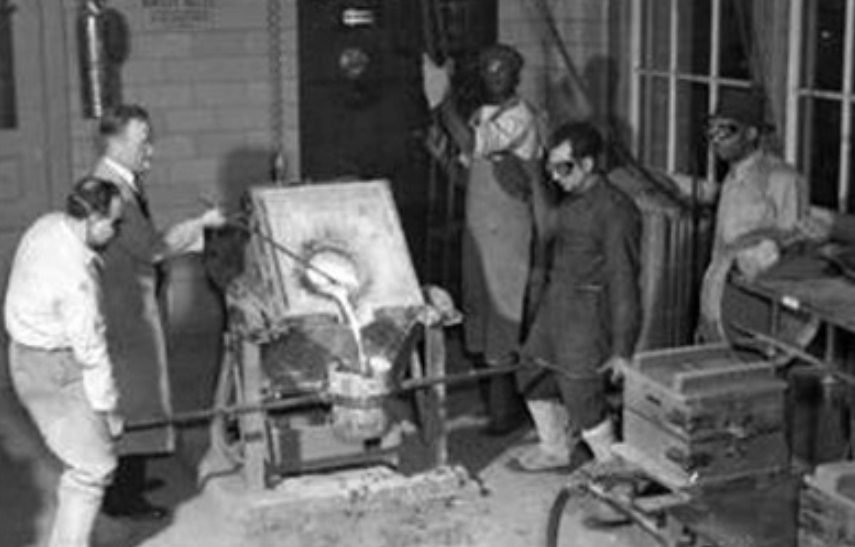
A defining feature of Dr. Colston’s educational model was a curriculum that included two years of general studies with a technical and mechanical focus, followed by two years of specialization in career-oriented fields. In 1933, students could choose from the following majors: architecture and construction, chemistry, electrical engineering, mechanical engineering, and structural technology.
Extracurricular Activities
Extracurricular activities were an integral part of BTHS from the very beginning. The school’s first newspaper, The Survey, was published in 1922, later followed by The Science Bulletin, the first of many departmental publications. In 1933, The Survey’s Senior Number, the original combined yearbook and literary magazine, was replaced by The Blueprint, which remains the school’s official yearbook today.
Other student initiatives quickly followed. The Service Squad (SOS), a student-led patrol, maintained order in the school for nearly 60 years. Student government organizations, Longfellows, Arista, and various other student clubs flourished. Sports also became an essential part of student life, with baseball, football, tennis, cross-country, hockey, swimming, basketball, bowling, rifle shooting, and fencing among the athletic programs offered.
In 1939, the school’s radio station, WCNY, changed its call sign to WNYE. Broadcasting from a studio on the eighth floor, it launched the New York City Board of Education’s educational radio programming. In 1941, an FM transmitter was added to enhance the station’s capabilities.
One of Dr. Colston’s greatest points of pride was the creation of a Works Progress Administration (WPA) mural project, designated WPA Project No. 3149. The Tech Foyer mural, designed by artist Maxwell Starr, depicted the “History of Humanity” from the Stone Age through the 1930s, featuring prominent scientists and inventors.
Two Nobel Prize Winners
During World War II, Brooklyn Tech saw an increase in students rushing to graduate early to join the armed forces. The school also played a critical role in educating working adults, offering night classes through Brooklyn Tech Evening High School. These evening programs provided technical training for many who sought to improve their job prospects.
After Dr. Colston retired in 1942, the Board of Education appointed Ralph Brailing as acting principal. He was later replaced by Harold Taylor in 1944. However, the most stable period in the school’s development occurred under the leadership of Dr. Pabst (1946–1964), who reinforced Tech’s reputation for academic excellence. By this time, the school offered specialized courses in aeronautics, architecture, chemistry, electricity and electronics, industrial design, mechanical technology, structural technology, and college-level technical preparation.
The school’s literary magazine, Horizons, was launched during this period and has been published every semester since. After Dr. Pabst retired, Frank Stewart served as acting principal until the appointment of Isidore Auerbach, who was named principal by New York City Mayor John Lindsay in late 1966.
Brooklyn Tech’s achievements are commemorated in its Alumni Hall of Fame, which celebrates graduates who have excelled in various fields. The school has produced two U.S. Congress members, two Nobel Prize winners, an astronaut, numerous inventors, an Olympic medalist, and many other distinguished professionals.