

When discussing the history of Brooklyn’s grain business, it should be noted that it is defined both by the legacy of industrial enterprises such as the Red Hook grain terminal. It is also defined by the modern revival of the industry thanks to new initiatives such as the Brooklyn grain terminal and mill in Gowanus. Historically, the Brooklyn waterfront has been defined by the presence of industrial enterprises, such as the Brooklyn grain terminal and mill in Gowanus. Such as the Brooklyn grain elevator and mill in Gowanus. Historically, the Brooklyn waterfront has played a crucial role in shipping and grain storage. The logic here is quite simple — since grain was delivered by sea for processing, these facilities were built right here. Not so long ago, the business was revived, so current projects are focused on grinding grain for modern bakeries and food companies. For more details, visit brooklyn1.one.
Construction of the terminal
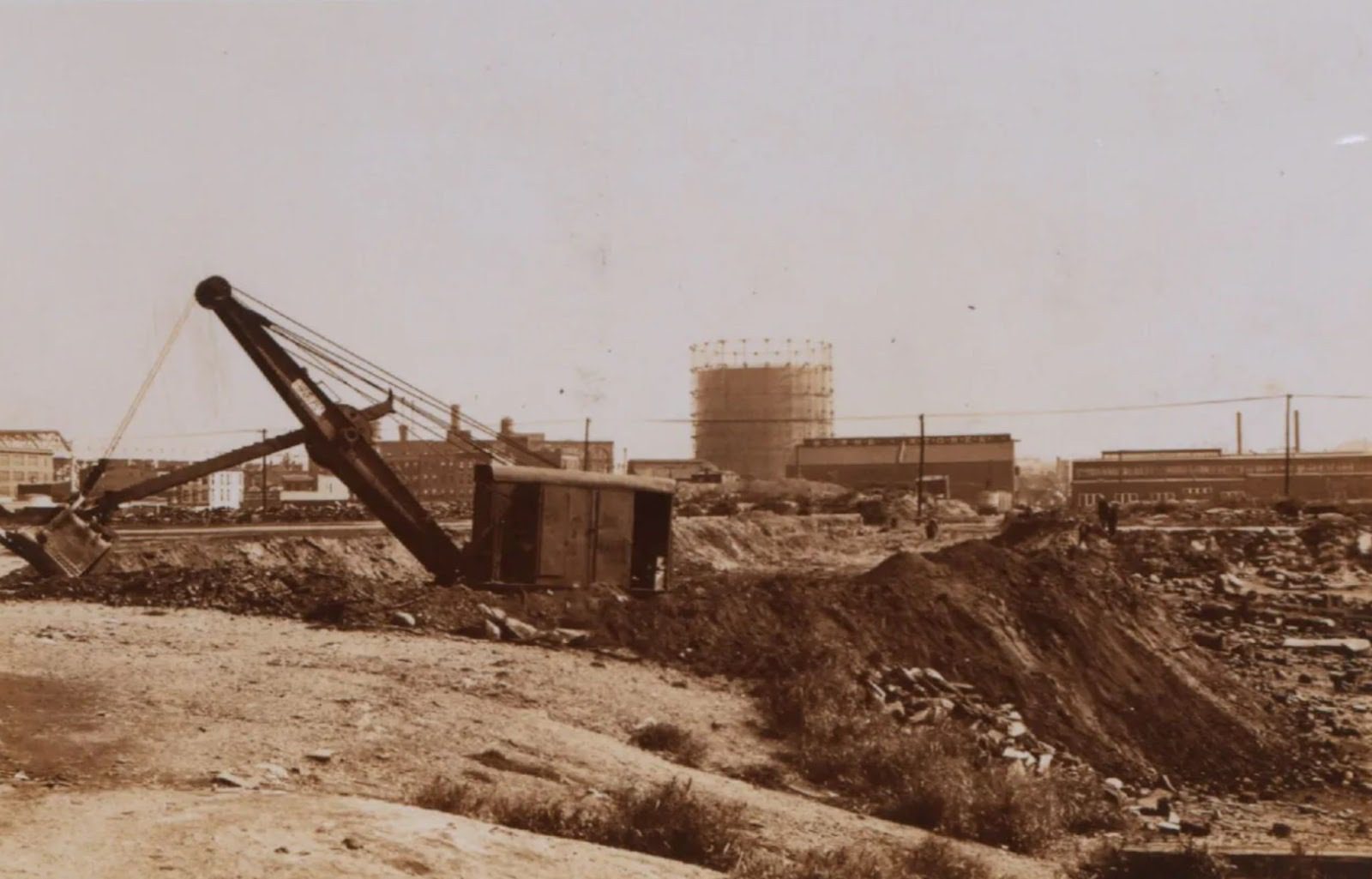
Thus, shipping and the grain business in Brooklyn turned out to be closely linked and interdependent. Based on this, the famous Red Hook grain terminal was built. It was located at the mouth of the Gowanus Canal, in the Brooklyn neighborhood of the same name. The year of its construction is listed as 1922. Red Hook became part of the New York State canal system.
This project became a plan to connect a whole series of new waterways. All this was necessary to change the route and improve navigation along the Erie Canal. In addition to Red Hook, the New York State canal system included canals such as Cayuga-Seneca, Champlain, and Oswego.
The Erie Canal, which connected the lake of the same name with the Hudson River. It was opened three years later on October 26, 1825. This canal played a significant role in the development of shipping and the trade economy, not only in Brooklyn, but also in New York City. In the early 1920s, the grain trade was already in decline. Therefore, it was in an attempt to revive the Gowanus Canal and in accordance with the new canal system that the construction of the Red Hook Grain Terminal along the Gowanus, which at that time was rarely used as a waterway, began.
The Red Hook grain terminal opened on September 1, 1922. Even before the work began, some contemporaries already considered this project a hopeless failure. This was due to the decreased use of the canal as a waterway and the overall decline in grain shipments in those years compared to the previous decade. But despite the skeptics’ opinions, the structure was used for its intended purpose until 1965. Moreover, even nowadays it is still standing, although it was abandoned more than fifty years later.
The Great Brick Warehouse
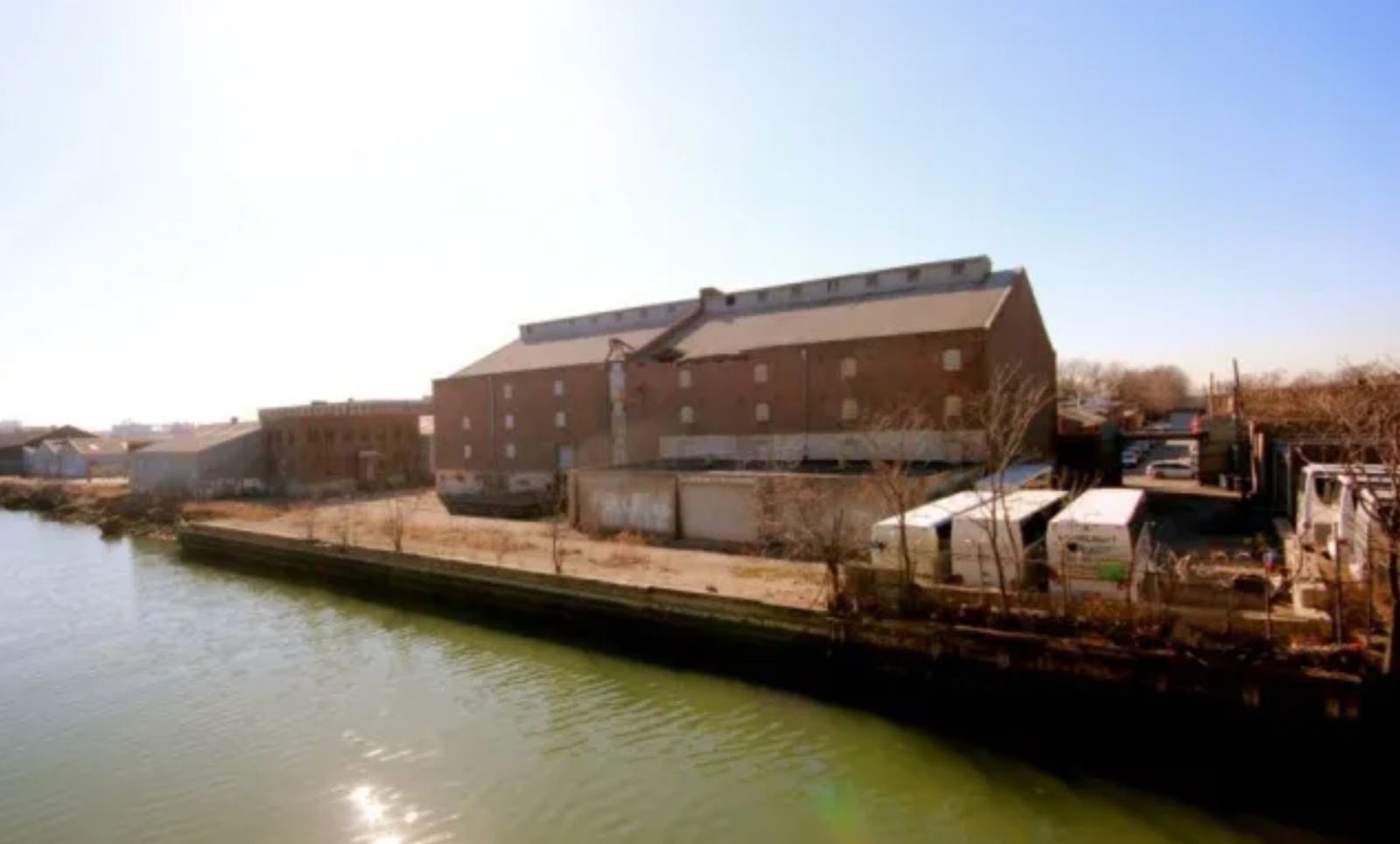
Tucked away at the mouth of the Gowanus Canal, this large and forgotten building is located near the Brooklyn-Queens Expressway. It is a classic brick warehouse building from the late nineteenth century. Its exact address is 595-611 Smith Street in Red Hook. At one time, the large SW Bowne granary, which was built in 1886, was already operating here. Back in the day, Brooklyn’s Red Hook piers and Gowanus warehouses were the heart of shipping. Goods were delivered, stored, and shipped to and from here all over the world.
Food and raw materials were among the most common commodities stored and sold here. Grain, of course, was one of them. And between 1850 and 1950, an incredible amount of grain was processed here, not counting the plant materials associated with it. Today, the remnants of this part of the industry are scattered in various forms around Red Hook and Gowanus.
The SW Bowne Company sold not only grain, but also hay, straw, and animal feed. The company also processed oats and corn into livestock feed. The grain was stored in this huge warehouse. In other words, there were four floors of grain and fodder. And a significant majority of these products were stored in bags. According to contemporaries, it was a very labor-intensive business, requiring considerable physical strength from the men who worked here, as they carried these heavy sacks all day long. The grain was also stored for a reason, by type and date, and then transported for sale.
Based on all of this, it was vital to keep the warehouse dry, preventing dampness, and protecting it from mold and rot. Another problem that the warehouse had to deal with was the infestation of rodents and insects. As for the technical component, simple block lifts, as well as ramps and sliders, were probably used in the beginning. By 1916, the granary already had conveyor belts and equipment for moving and mixing grain.
Architectural component
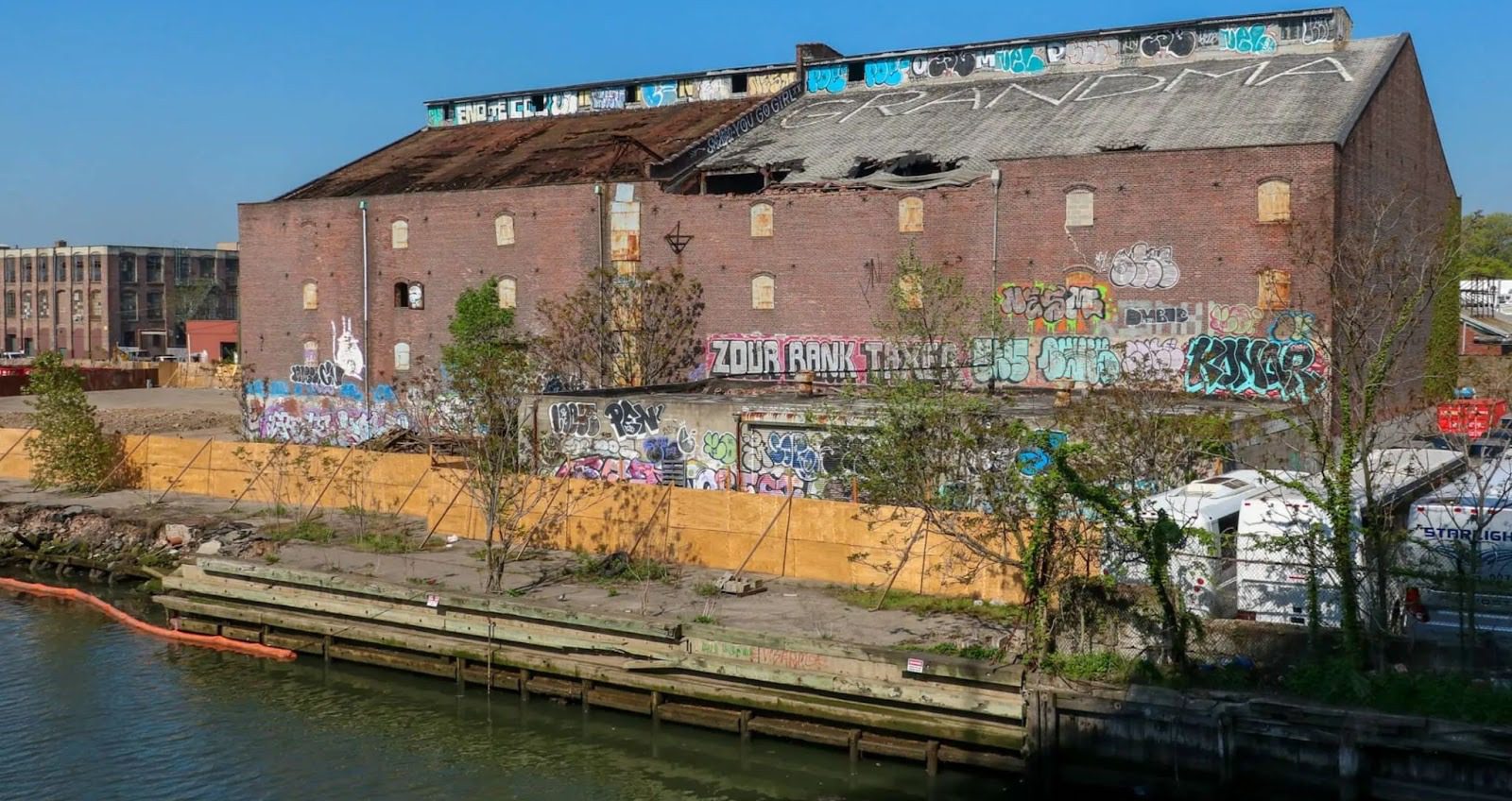
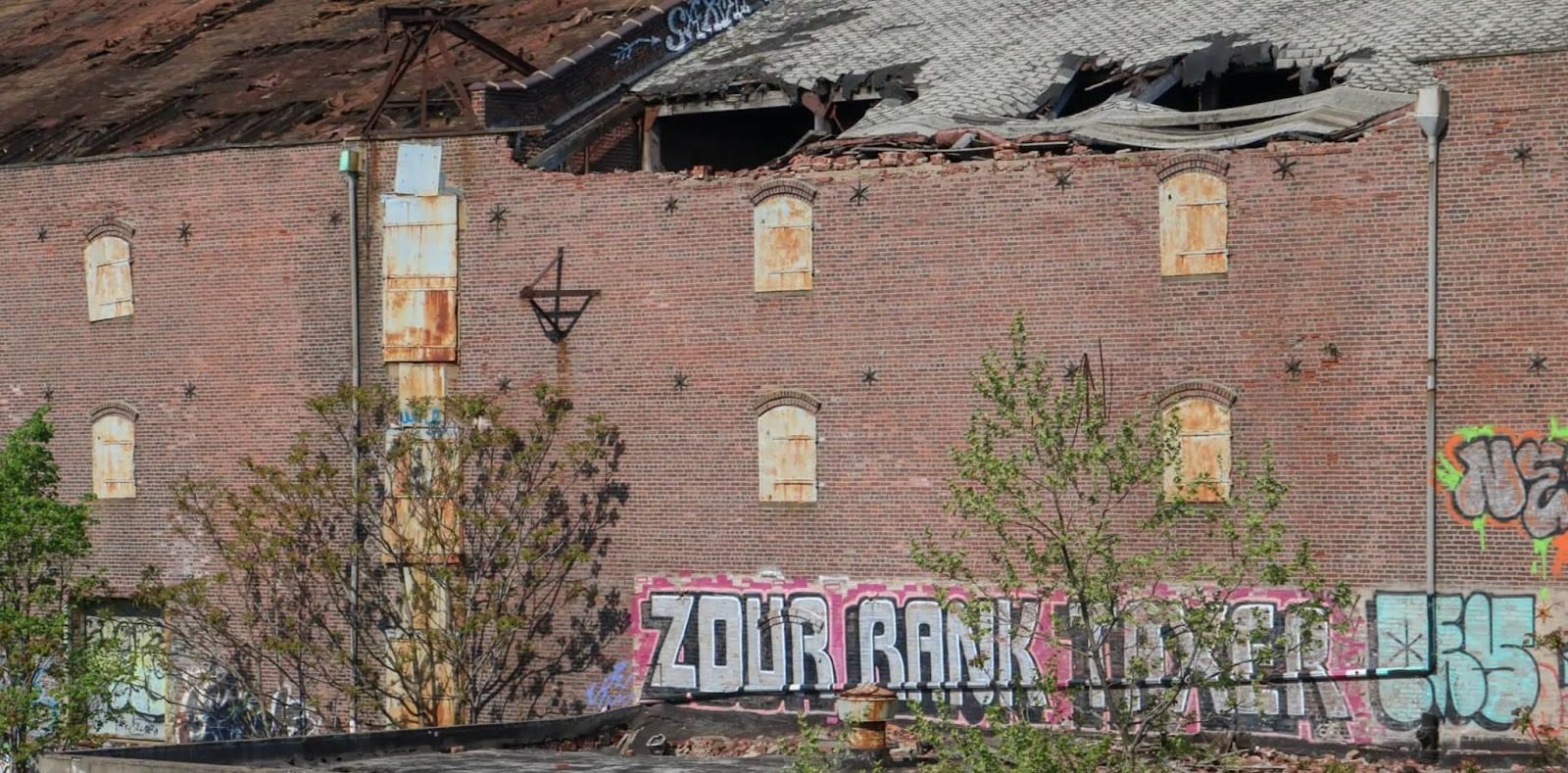
The building itself was made of very high quality red brick. It was designed to have metal doors. Inside, there are many different stairs and ramps, as well as many beams supporting both the floor and the ceiling. It was a necessary measure because the grain is very heavy.
However, the building itself is still quite strong. It also has an upper part of the roof with skylights to let light into this otherwise very dark building. This was not the usual way to solve the problem of lighting grain warehouses, but in this case it worked. The light first entered through the windows and continued to descend through the central staircase.
Even though SW Bowne was not a large company, it traded in stock and had a board of directors. Its president was SW Bowne himself, and he owned 560 of the company’s 800 shares. He was not the kind of person who liked to sit in big offices. Bone often went to the warehouse and liked to work with his employees. In 1916, he had an unfortunate accident.
Helping workers bring wood through a warehouse window, Bone’s leg fell through a hole in the floor, and his pant leg got caught on a conveyor belt running underneath. This belt pulled the man down, and his leg got caught in a mechanism that instantly crushed it. The injury was very serious, and eventually Bone had to have his leg amputated above the knee.
Then a curious incident occurred when he could not be paid compensation. Bone had to file a lawsuit. Eventually, he did receive compensation for his lost leg, but only after he proved in court that he was an employee of his own company. Fortunately, the court agreed with Bone’s arguments.
However, the company’s board of directors did not agree with the court’s decision, and the case ended up in the Court of Appeal. The court ruled that although Bone owned a majority of the shares and was also the company’s president, he was still an employee and therefore entitled to compensation as an employee of his company. Interestingly, the case was registered in 1916 in the New York State Court of Appeals as Bowne v. SW Bowne Co.
The old grain warehouse and modern realities
The warehouse has not been used since the 1960s. In 2007, according to public records, a limited liability company called CF Smith purchased it from the previous owner for $14.5 million. Therefore, if you look at recent permit applications, you can see that the current owner is Meyer Chetrit. He is from the family that owns the well-known real estate firm Chetrit Group. Among the company’s numerous projects in Brooklyn are the M500 hotel, a super tall skyscraper at 9 DeKalb Street, and the Bossert hotel.
In 2014, part of the roof on the 20th floor collapsed, and the building, which seemed to be of no interest to anyone, attracted graffiti artists, who used the walls facing the canal as their canvas. Also in 2014, the parapet collapsed in the building.
Sources: