

The presence of educational institutions significantly enhances a city’s prestige, and New York City has no shortage of them—nor does Brooklyn. One of the borough’s leading institutions of higher learning is Brooklyn College. More details at brooklyn1.one.
A Unified Learning Experience
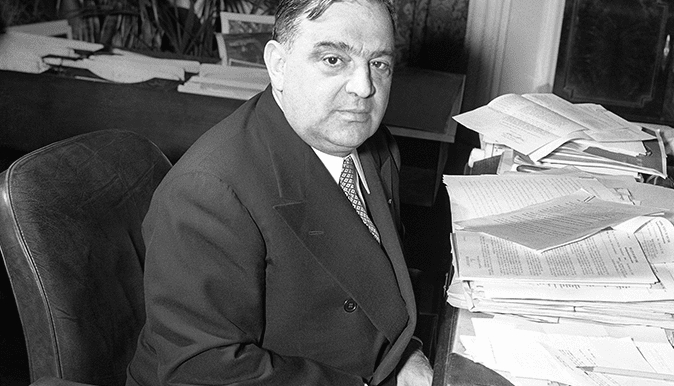
In the early 20th century, New York and Brooklyn maintained a strict division between men’s and women’s educational institutions. Brooklyn College was founded in 1930 and, that same year, merged with Hunter College, becoming the first coeducational college in the borough.
The first students faced a rigorous selection process and entrance exams, but the opportunity was well worth it. From its inception, Brooklyn College provided a high-quality education, which was entirely free.
Everything about the institution was designed to foster learning. The college’s main building and library were designed by architect Randolph Evans. As a newly merged institution, Brooklyn College needed a new campus. In 1932, Evans drafted plans for its development, and the land for construction was purchased for $1.6 million. Construction of the main building began in 1935, with New York City Mayor Fiorello La Guardia and Brooklyn Borough President Raymond Ingersoll attending the groundbreaking ceremony. The project was completed in a remarkably short time.
The tenure of President Harry Gideonse (1939–1966) was considered the most successful period in the college’s history. During this time, Brooklyn College produced more doctoral graduates than at any other point in its existence.
A Refuge for All
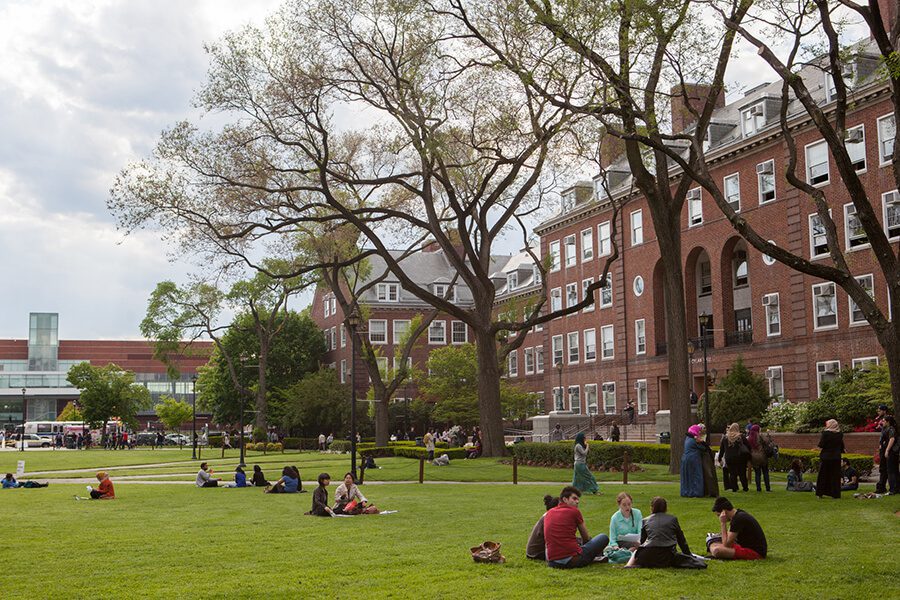
The rise of Nazism in Germany forced many scholars to flee, and a significant number found refuge at Brooklyn College. One-third of female historians who fled Nazi Germany ended up teaching there, which greatly enhanced the institution’s academic reputation. In 1956, Brooklyn College hired its first Black professor, making it the first higher education institution in New York City to do so.
By 1959, the college had an enrollment of 8,000 students, none of whom paid tuition. Faculty salaries and operational costs were entirely funded by the city budget, yet this did not compromise the quality of education. In 1962, Brooklyn College became part of the City University of New York (CUNY) system.
Despite its prestige and academic strength, Brooklyn College could not withstand the financial crisis of 1975. Since it relied heavily on city funding, the budget cuts were devastating. The downtown Brooklyn campus had to be closed, leaving only the Midwood campus operational. This marked the first time the college had to charge tuition. That year, 30,000 students enrolled.
Robert Hess, the college’s sixth president, elevated its status to rival that of New York City’s private universities. Brooklyn College ranked fifth nationwide in student financial support.
In 1989, the college surpassed 11 Ivy League institutions in the number of doctoral graduates it produced. This led to its nickname: “The Harvard for the Poor.”
Necessary Changes
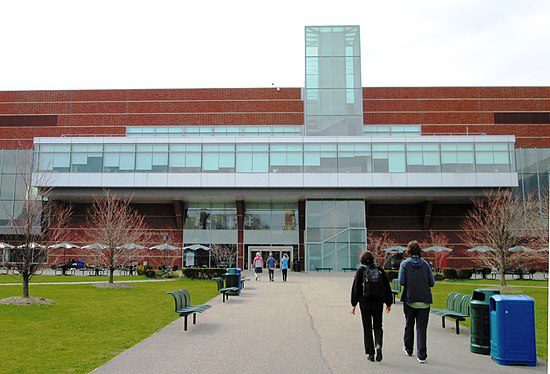
In the 21st century, the eastern part of the Brooklyn College campus remains largely unchanged from when it was first built. However, its facilities have evolved. It is now home to four theaters and Brooklyn College Presents, a performing arts initiative.
One of the theaters, previously housed in the Gershwin Hall, had to be relocated due to campus renovations that led to the demolition of several buildings. Despite theater alumni donating $10 million to the college, they had to share space with other departments.
Another building, Plaza Building, was also demolished due to structural flaws. Its ventilation system was inadequate, and maintenance costs outweighed its usefulness. In its place, the college built the West Quad Center, designed by renowned Uruguayan architect Rafael Viñoly. The new facility met modern standards, featuring spacious classrooms, a gymnasium, and a swimming pool. The men’s basketball team began hosting home games there.
One of the college’s original buildings—the library—underwent a $70 million renovation, with work on LaGuardia Hall completed in 2003.
Academic Programs
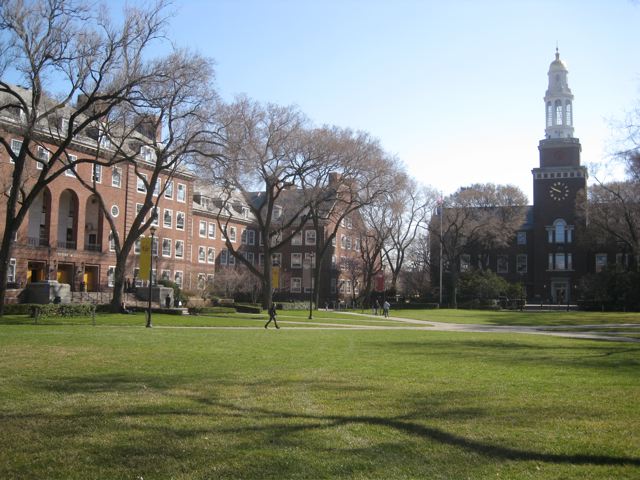
In 1981, Brooklyn College introduced a “Core Studies” program, which all students, regardless of major, were required to complete. Before this, students only took courses specific to their field of study. The new program aimed to broaden students’ knowledge by incorporating subjects such as art, mathematical reasoning, literature, chemistry, biology, and physics. Originally comprising 13 required courses, the program was expanded to 15 in 2006, adding three additional disciplines.
In 2013, Brooklyn College implemented a new general education model while also expanding its degree offerings to nearly 100 majors, covering disciplines from the arts to the sciences.
Graduate education had been part of the college’s vision since 1935. Over time, it developed nearly 70 graduate programs across various fields. Its theater program became one of the most prestigious in the state, significantly enhancing the college’s reputation. Its graduate programs also gained recognition.
When Brooklyn College began charging tuition, it introduced a scholarship program for gifted students. The selection criteria were extremely rigorous—only 15 students were chosen annually. Scholarship recipients were closely monitored throughout their studies. They were required to engage in community service for three semesters, participate in summer volunteer programs, and maintain a broad academic curriculum. Their GPA could not fall below 3.5.
In 1960, the college launched its Scholars Program, the oldest honors program at the institution. It offers foundational courses, specialized seminars, and one-on-one mentorship opportunities.
The college’s engineering program is another highlight. It offers a combined engineering curriculum, replacing the first two years of traditional engineering programs.
The Barry R. Feirstein Graduate School of Cinema is among the top public film schools in New York. It is also the only graduate film school in the U.S. with a dedicated space on a working film set—Steiner Studios. The school opened in 2015.
Beyond academics, Brooklyn College has a thriving athletics program. Sports available to students include basketball, cheerleading, soccer, diving, swimming, tennis, cross-country, and volleyball.
The college’s motto: “Nothing Without Great Effort.”
Notable Alumni
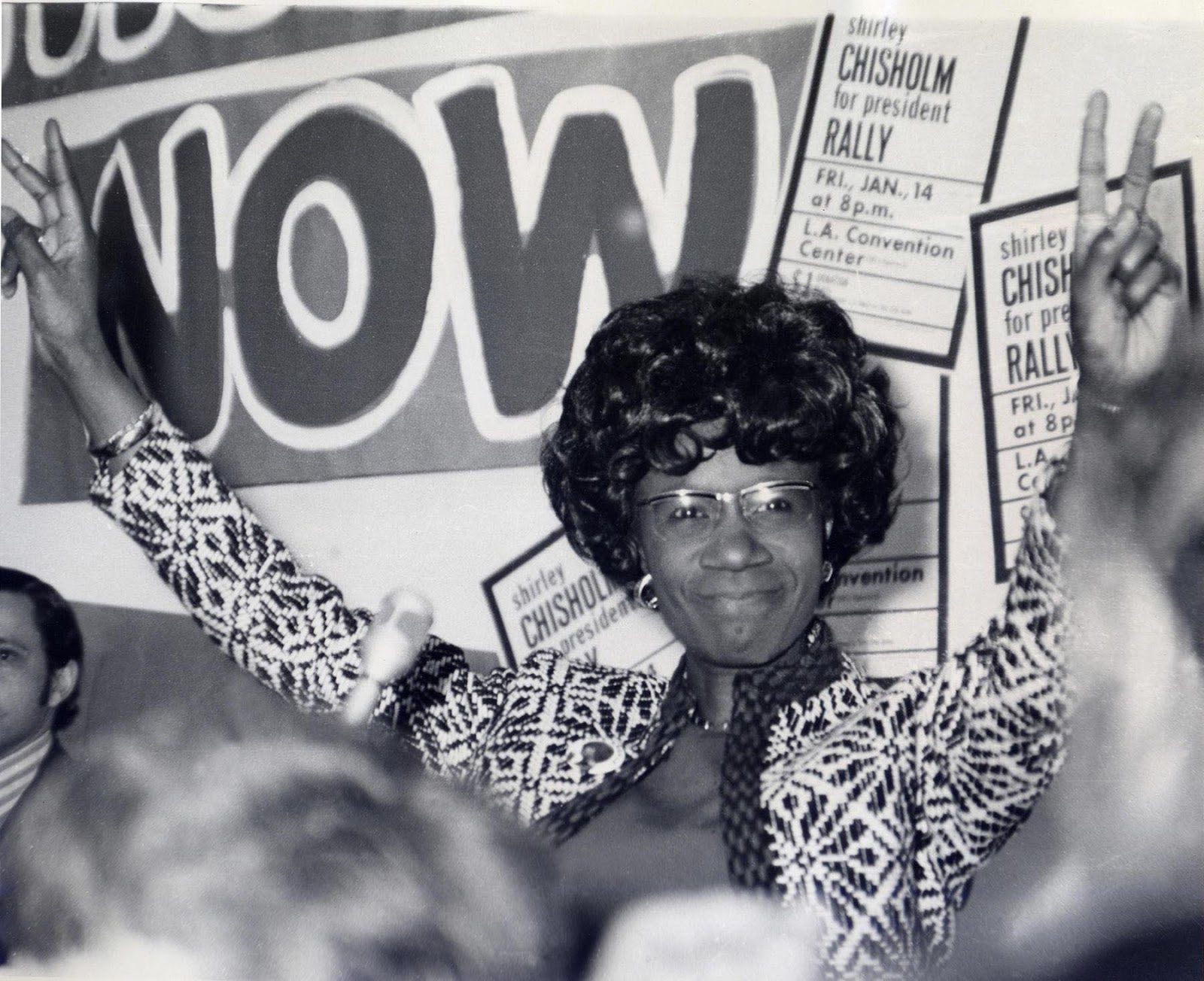
Brooklyn College has an impressive list of distinguished alumni, including senators, scientists, and lawyers. One of its most famous graduates is Shirley Chisholm, the first Black woman elected to the U.S. Congress and the first woman to run for the U.S. presidency. Born and raised in Brooklyn, Chisholm chose to attend her local college.
Among the college’s notable figures in the arts is Hollywood actor James Franco.
Brooklyn College alumni have been recipients of numerous prestigious awards, including the Nobel Prize, Emmy Awards, Pulitzer Prize, Golden Globe, and Academy Awards.
In addition to high-profile public figures, Brooklyn College has produced many leading educators. Among them are Alphonsus Donlon, former president of Georgetown University, and Betty Glad, a department head at the University of Illinois.
The college’s athletics program has also nurtured top athletes, including Olympic champions.