

Each borough of New York City developed at its own pace, reaching similar milestones in different ways. Education has always been a crucial part of a city’s growth, and Brooklyn’s journey toward establishing its schools was a long and evolving process. More details at brooklyn1.one.
Education for All
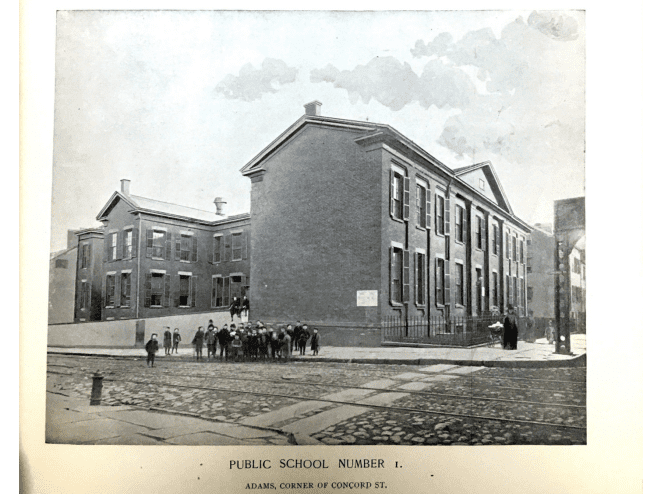
The first schools in Brooklyn were completely free and were established in 1661. Church buildings on what are now Fulton Street and Bridge Street were used to accommodate students, with Huguenots serving as teachers.
At the time, school funding was minimal. The annual budget for Brooklyn’s first schools was only $20. For nearly two centuries, schools across the borough remained on roughly the same financial level. It wasn’t until the late 19th century that Brooklyn’s schools received substantial funding.
In 1891, the city allocated $1.6 million for school financing. By then, Brooklyn had over 2,000 schools. At the end of the 19th century, New York City established a Board of Education, and Brooklyn’s schools came under its jurisdiction.
The Board of Education played a significant role in shaping the school system. Before its formation, each school had complete autonomy over its curriculum, with teachers deciding independently what subjects to teach and in what order.
The Board introduced standardized curricula and also assessed the condition of school buildings. It found that many Brooklyn schools were in poor condition, with inadequate fire safety measures and restroom facilities. Another major issue was overcrowding. There were too many students but not enough schools or classrooms, forcing children to study in shifts—a system that was far from ideal for young learners.
School Expansion and New Funding
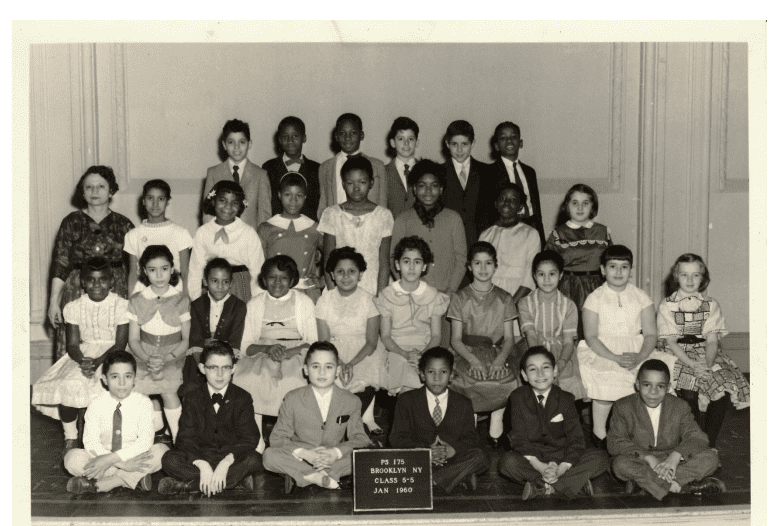
In 1899, the city increased school funding, allocating $7.5 million to construct 39 new schools. These funds were raised through the sale of corporate bonds, meaning New Yorkers themselves played a role in financing the expansion. At the time, most students were children of immigrants. As schools grew, so did dormitories and other student housing facilities.
In 1890, the Brooklyn Kindergarten Society was founded. At the time, public schools did not offer kindergarten programs, and private options were scarce. Young children either stayed at home or wandered the streets until they were old enough for elementary school.
Kindergartens were not just about keeping children occupied—they also helped prepare them for school. The first kindergartens in Brooklyn served as early learning centers and also provided training for future teachers. The expansion of kindergartens accelerated during World War II when the government sought to free up more workers for the wartime labor force by providing childcare.
After World War II, kindergartens became an official part of the public school system. The Brooklyn Kindergarten Society focused its efforts in three main areas: Bedford-Stuyvesant, Williamsburg, and Red Hook. Over time, it evolved into a modern early childhood education institution.
Schools Against Racial Segregation
In the 1970s, New York City introduced a new type of school known as magnet schools. Their primary purpose was to reduce racial segregation in education. The first magnet schools operated on a voluntary basis—students were not assigned there by the city; instead, parents could choose whether to enroll their children. One of the first magnet schools was located in the Bronx.
The concept of magnet schools emerged from specialized schools that focused on subjects like mathematics and the humanities. However, unlike specialized schools, which required entrance exams regardless of student preference, magnet schools prioritized voluntary enrollment.
Prototypes of magnet schools still exist in the 21st century, though they have undergone significant changes, including curriculum improvements and efforts to close achievement gaps among students.