

In the 1880s, Coney Island, which used to be an island and later became a peninsula in the southwestern part of the Brooklyn borough, went from a distant resort with a sandbar to the city’s largest beach area. So, the West End became a place of a wide variety of often pretty obscene attractions. Popular attractions included beer establishments, roller coasters and freak shows. However, probably the most extravagant feature of the resort area at the time was the Elephant Colossus. The nearly 200-foot-tall hotel was made of blue tin and topped with a gilden crescent. Learn more about the construction and “life” of the world-famous Brooklyn elephant at brooklyn1.one.
Construction of a peculiar elephant
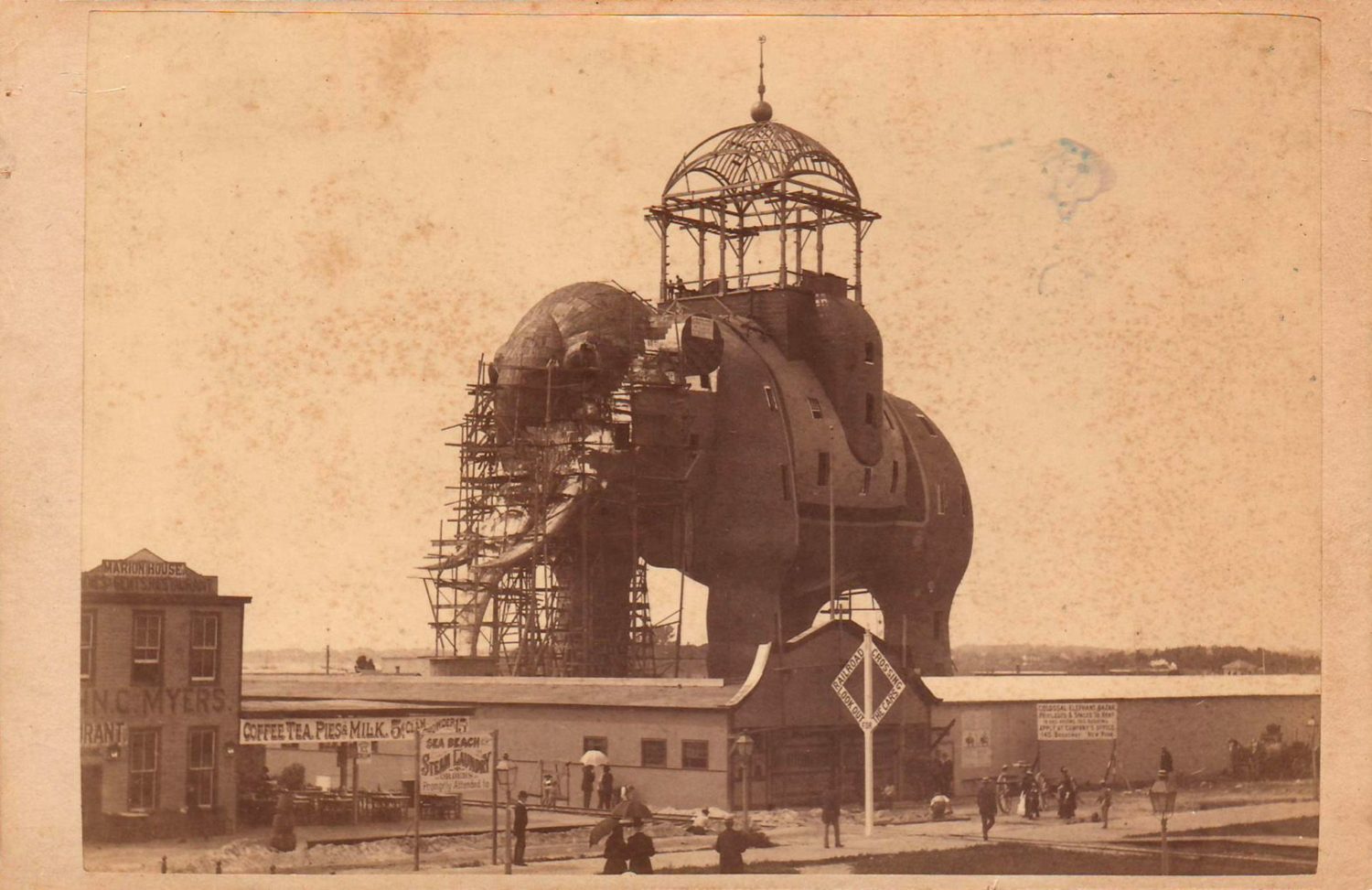
Surrounded by Shaw Channel Chute roller coasters, the hotel resembled a bizarre version of one of the real, thick-skinned elephants on display at Coney Island amusement parks, just around the turn of the century. The constructors did not hesitate to refer to this hotel as “the Eighth Wonder of the World”. Locals, on the other hand, soon began referring to it as a brothel. Even while the title reflected reality, it was not particularly popular among ordinary tourists.
To cut to the chase, the Elephant Colossus, also known as the Elephant Hotel, was a popular and even renowned tourist attraction that once occupied a central position on Coney Island in Brooklyn. The hotel, designed in the shape of an elephant, was an excellent example of innovative architecture. The seven-story building was situated on Surf Avenue and West 12th Street from 1885 to 1896. Throughout its history, the thirty-one-room structure, among other functions, served as a concert hall and entertainment venue. The hotel was designed by James Vincent de Paul Lafferty, Jr. He was an Irish-American inventor and architect from Philadelphia, Pennsylvania, who was evidently interested in designing buildings that resembled animals, particularly elephants.
Prior to the Elephant Colossus, Lafferty Jr. designed two similar structures: Lucy the Elephant in Margate, New Jersey, completed in 1881, and The Light of Asia in Cape May, also in New Jersey, which stood from 1884 to 1900, until it was demolished. Lucy maintained her status as the oldest roadside tourist attraction in the United States up until recently.
The People’s Playground
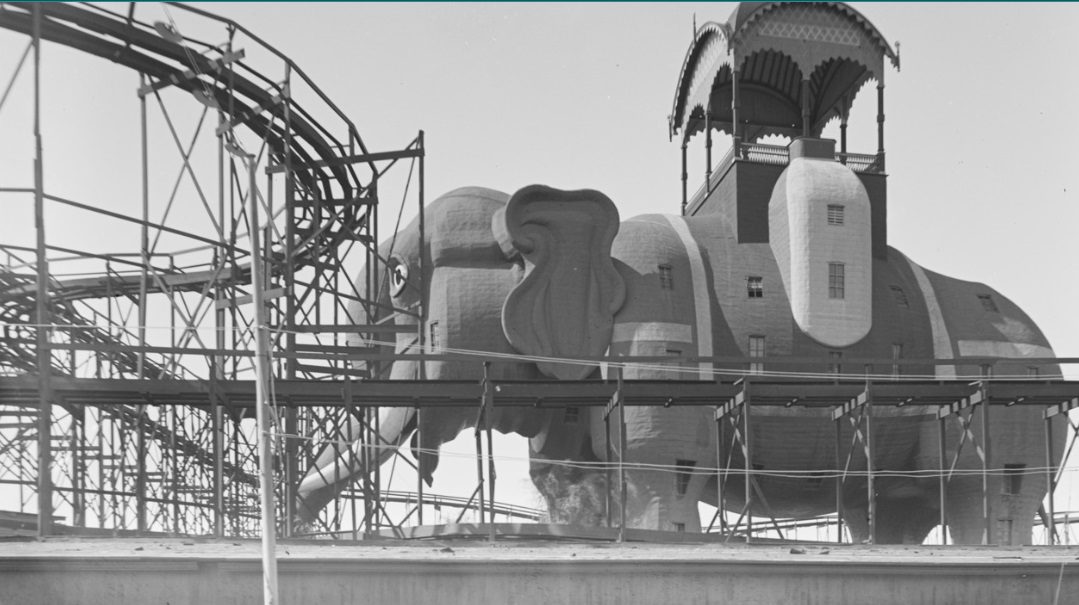
Between 1880 and World War II, Coney Island was the largest entertainment area in the United States of America, attracting several million visitors yearly and earning the name The People’s Playground. During its peak, it housed three major competing amusement parks: Luna Park, Dreamland and Steeplechase Park, as well as other independent attractions, such as the Elephant Colossus.
Built during Coney Island’s first tourist boom, the 200-foot-high elephant-shaped hotel had a howdah topped with a gilded crescent moon on its back. This kitsch monument had a brief and unusual life. Shortly after construction, the hotel was turned into a brothel, which burned down just ten years after its construction.
However, first things first. Construction was completed in 1885. The 12-story elephant was comprised of 31 rooms. Additionally, for ten cents, visitors could go up to the observatory and get an incredible view of New York City by looking through the elephant’s eyes, which were actually telescopes.
Built before the Statue of Liberty
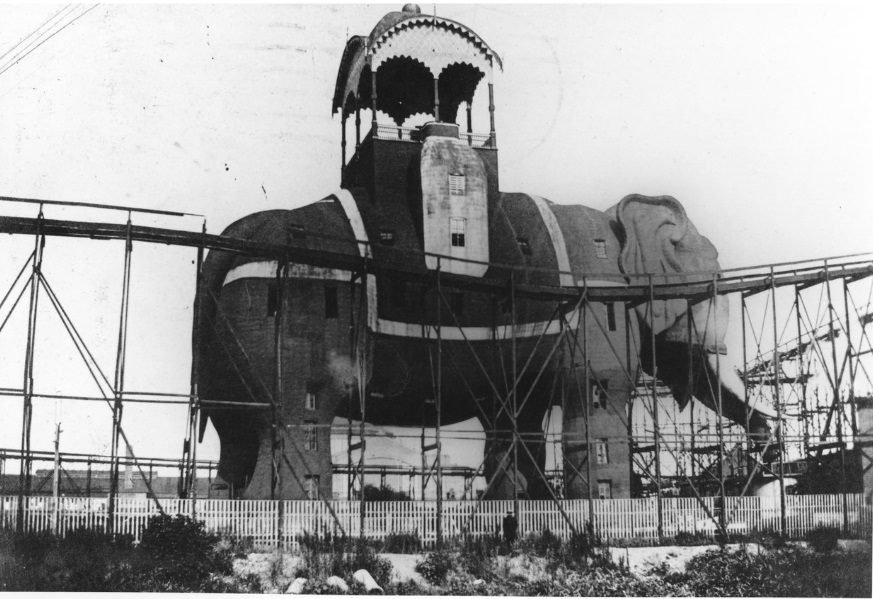
The Elephant Colossus was completed two years before the Statue of Liberty. Furthermore, for a short time, the Elephant Hotel was the first building seen by newly arrived immigrants. Elephant, modestly called the “Eighth Wonder of the World” by its creator, embodied all of Coney Island’s vibrant, unpretentious and pompous charm. The building’s original project included a concert hall and an entertainment room in the creature’s belly, as well as a museum in the area that would be its left lung. Its head served as an observatory, and its eyes were telescopes from which visitors and guests could climb to view the ever-changing cityscape that surrounded them.
In the middle of the animal’s front paws was a cigar shop and a diorama, and in the hind legs was a spiral staircase leading to the rooms located above. The hype surrounding the unusual structure faded faster than its owners anticipated, and as soon as tourists stopped visiting, a thriving community of sex workers began to move to Coney Island. The hotel was transformed into an elephant-shaped brothel, and the phrase “seeing an elephant,” according to the New York Historical Society, has become local slang for someone looking for a prostitute.
However, by the 1890s, prostitutes had also left the Elephant Colossus, and following a mysterious incident, the abandoned structure burned down in all-consuming flames on September 27, 1896, and was never rebuilt. According to rumors, the fire was so intense and spectacular that it could be seen all the way from Sandy Hook on the New Jersey coast. So, during its brief existence, the Elephant Colossus served as both an observatory and, when its owners faced difficult times, a brothel.