

Due to poor sanitation, New York City and Brooklyn experienced serious smell issues in the middle of the 1800s. Back then, people used to claim that the foul smell of Manhattan could be sensed three miles away. It got to the point where having fresh flowers in the house became a necessity. This is how the scent of stinky streets was hidden. A similar situation happened in restaurants, where flowers were placed on tables to hide the body odor of clients who lacked appropriate hygiene. Read about solving sanitary issues and building the first public baths in Brooklyn at brooklyn1.one
Subcommittee on Baths and Lavatories
Another reason for the introduction of public baths in New York was that apartment buildings often did not have running water or had rusty pipes. The first such bathhouse opened on Mott Street in 1851. Beginning in the 1870s, temporary baths were opened that only functioned during the summer. In the 1880s, the city established year-round public baths to encourage hygiene and decrease disease outbreaks. The progressive reformers of that era aimed to improve the social standing of the poor. The Association for Improving the Condition of the Poor suggested erecting baths in the style of ancient Roman architecture.
In 1895, New York City Mayor William Strong constituted a Subcommittee on Baths and Lavatories. In the same year, New York State passed legislation mandating the construction of public baths in first- and second-class communities.
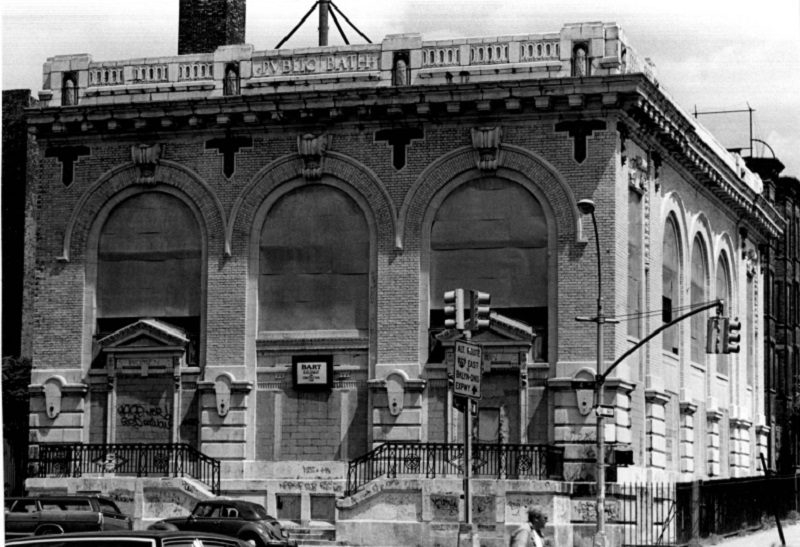
As a result, Brooklyn became home to an extensive network of public baths. The seventh and final public bathhouse constructed in the borough was known as Public Bath No. 7. Two of the structures in Brooklyn have survived to this day. One at 1752 Pitkin Ave. was closed in 1960, and another was built at Cowood Gliders on Huron St. This one closed in 1949. When Public Bath No. 7 opened in 1910, it was the largest and most luxurious of the seven. The structure was designed by Raymond F. Almirall. He was a notable Brooklyn architect who designed four Carnegie Library buildings in Brooklyn.
Public Bath No. 7
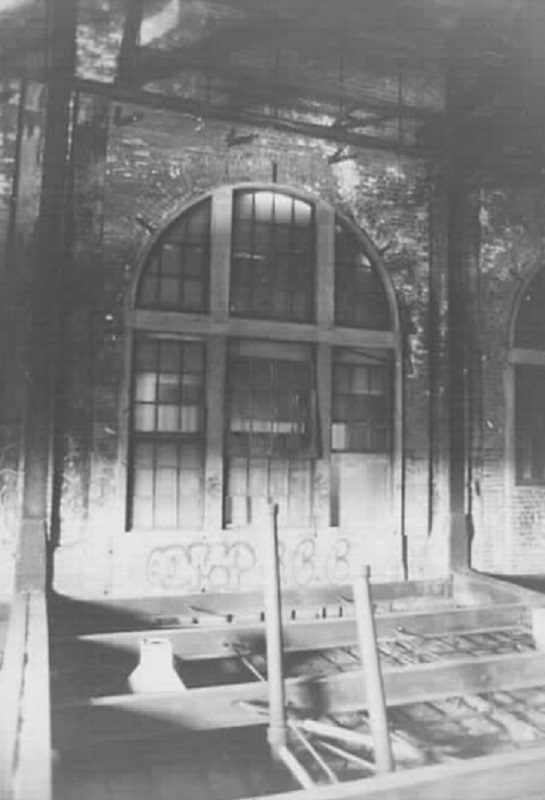
Public Bath No. 7 featured separate entrances for men and women. Above the entrance, you can still see the words “MEN” and “WOMEN”. Outside, the structure is adorned with terracotta dolphins, urns and Triton, the father of the sea god Poseidon. The basement included a swimming pool as well as laundry facilities. The ground-floor atrium faced the pool. Waiting rooms for men and women were located around the ground-floor booths. There were also 41 men’s showers, 30 women’s showers and 9 baths on the ground floor. The location of Public Bath No. 7 was not chosen by chance. It was located near apartment buildings in the Gowanus neighborhood, where many factory and dock workers with their families lived. It took four years to complete construction. When this house was still under construction, apartment building laws were enacted that required the installation of bathrooms in each new apartment.
Later, the Works Progress Administration, a Depression-era federal work project, was assigned to complete the renovation of Brooklyn’s public baths. The original soapstone booths were replaced with marble fences, the floor was covered in non-slip ceramic tiles, terracotta and block dividers were installed and shelves and granite steps were constructed.
Public Bath No. 7 closed in 1937. Some baths were later transformed into public pools, like the Asser Levy Public Bath building in Kips Bay, which is now part of the Asser Levy Recreation Center. From the 1990s to 2012, the Brooklyn Lyceum used the building to host concerts and theater productions, and there was also a cafe on the premises. In February 2013, the building was sold at an auction.
Brooklyn’s last public bath
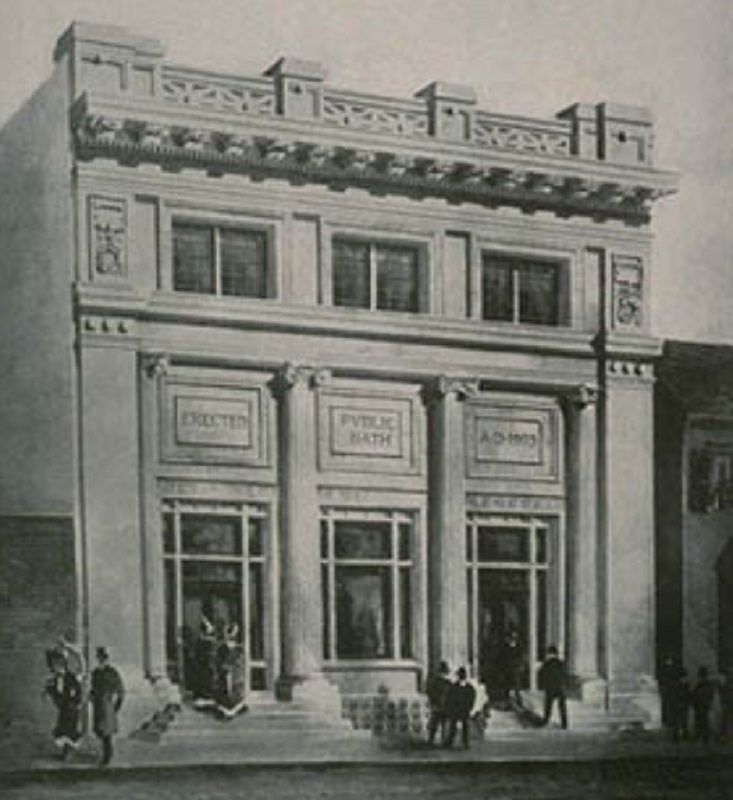
Another public bath in Brooklyn, on Huron Street, was constructed in 1903 and opened in 1904 as part of the New York City public bath initiative. Landlords were in no haste to comply with apartment building restrictions enacted in 1901, which required new apartments to have plumbing and private bathrooms.
It was designed by architect Louis A. Voss. Located at 139 Huron Street, it served the Brooklyn neighborhood of Greenpoint. On any given day, the bath was attended by a thousand or more people. The facility used steam heating and included a total of eighty-seven showers and two baths, with separate entrances for men and women on both sides of the structure.
In the mid and late 1950s, certain revisions were made to the state’s mandatory maintenance of public baths law, which was related to the objective state of affairs concerning baths. Internal plumbing became common practice in residential areas, and pots with water went into oblivion. In other words, internal plumbing was no longer something unusual and uncommon found in Brooklyn residences. As a result of the city budget cuts and a drop in interest, public baths began to gradually close. This included the public bathhouse on Huron Street. It was the last public bathhouse in Brooklyn built during this era, formally closing its doors on December 12, 1960.