

Arthur Ashkin is one of the oldest Nobel Prize laureates. He received the award when he was 96 years old. The American scientist worked at Bell Laboratories and Lucent Technologies. Many consider Ashkin the father of optical tweezers, for which he was awarded the 2018 Nobel Prize in Physics. Ashkin began his work manipulating microparticles with laser light in the late 1960s, leading to his invention of optical tweezers in 1986. He also pioneered the optical trapping process, which was later used to manipulate atoms, molecules, and biological cells. Read more about the Nobel laureate’s life on brooklyn1.one.
Early Life and Family
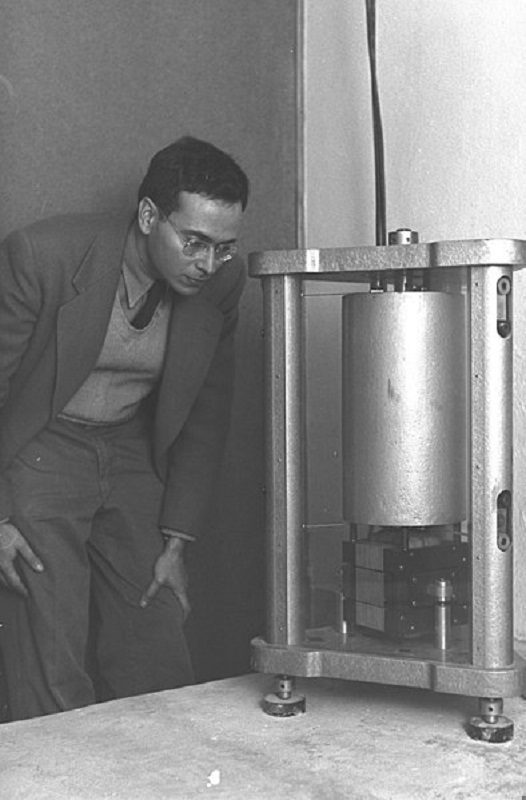
Arthur Ashkin was born in Brooklyn, New York, in 1922 to a family of Ukrainian-Jewish descent. His parents were Isadore and Anna Ashkin. Arthur had two siblings: a brother, Julius, also a physicist, and a sister, Ruth. The family home was in Brooklyn. Isadore emigrated to the United States from Odesa, then part of the Russian Empire and now Ukraine, at the age of 18. Anna, five years his junior, also came from modern-day Ukraine, from Galicia, then part of the Austro-Hungarian Empire. Ten years after arriving in New York, Isadore became a U.S. citizen and ran a dental laboratory at 139 Delancey Street in Manhattan.
Ashkin graduated from James Madison High School in Brooklyn in 1940. He then attended Columbia University while also working as a technician at the Columbia Radiation Laboratory, which was tasked with creating magnetrons for U.S. military radar systems. He joined the U.S. Army Reserve on July 31, 1945. He continued to work at the Columbia University laboratory. During this period, according to Ashkin himself, three Nobel laureates were present there.
Work at Bell Labs
Ashkin completed his coursework and earned his bachelor’s degree in physics from Columbia University in 1947. He then attended Cornell University, where he studied nuclear physics. This was during the era of the Manhattan Project, and Ashkin’s brother, Julius Ashkin, was a successful participant. This led to Arthur meeting Hans Bethe, Richard Feynman, and others who were working at Cornell at the time. He earned his Ph.D. from the university in 1952 and then went to work at Bell Labs at the request and recommendation of Sidney Millman, who had been Ashkin’s supervisor at Columbia.
At Bell Labs, Ashkin worked in the field of microwaves until approximately 1960–1961, when he switched to laser research. His work and published papers at the time focused on nonlinear optics, optical fibers, parametric oscillators, and parametric amplifiers. In the 1960s, he also co-discovered the photorefractive effect in piezoelectric crystals at Bell Labs.
Ashkin was a highly respected member of various professional societies, including the Optical Society of America (OSA), the American Physical Society (APS), and the Institute of Electrical and Electronics Engineers (IEEE). He retired from Bell Labs in 1992 after a 40-year career during which he contributed to several areas of experimental physics. Over the years, he wrote many scientific papers and held 47 patents. He was the recipient of the Joseph F. Keithley Award for Advances in Measurement Science in 2003 and the Harvey Prize in 2004. He was elected to the National Academy of Engineering in 1984 and the National Academy of Sciences in 1996. He was inducted into the National Inventors Hall of Fame in 2013 and continued to work in his home laboratory.
Nobel Prize
In addition to optical tweezers, Ashkin is also known for his research on photorefraction, second-harmonic generation, and nonlinear optics in fibers. Recent research in physics and biology using optical micromanipulation includes advancements in Bose-Einstein condensation in atomic vapors at sub-millikelvin temperatures, the demonstration of atomic lasers, and detailed measurements on individual motor molecules. Ashkin’s work laid the groundwork for Steven Chu’s research on cooling and trapping atoms, which earned Chu the 1997 Nobel Prize in Physics.
On October 2, 2018, Arthur Ashkin himself received the Nobel Prize in Physics for his work on optical trapping. The scientist was honored for his invention of “optical tweezers,” which grab particles, atoms, viruses, and other living cells with their laser beam fingers. This allowed him to use the radiation pressure of light to move physical objects, a long-held science fiction dream, as the Royal Swedish Academy of Sciences stated. He was awarded half of the prize, with the other half being shared by Gerard Mourou and Donna Strickland for their work on chirped pulse amplification, a technique now used in laser processing and allowing doctors to perform millions of corrective laser eye surgeries each year.
At 96 years old, Ashkin was the oldest Nobel laureate at the time.