

Before the advent of high schools, there were gymnasiums in Brooklyn. Opened in 1878, Central Grammar School was later known as the Central School. R F. Leighton became the first principal. It was located at the corner of Court and Livingston Streets. This institution was established for students who had graduated from the gymnasium and wanted to advance. Shops occupied the first floor, while the upper floor housed classrooms. Soon, so many students studied at the school that Brooklyn residents insisted on building a larger education facility. In 1886, Girl’s High School was opened. Read more about the history of its creation, construction and operation at brooklyn1.one.
Architect James Naughton
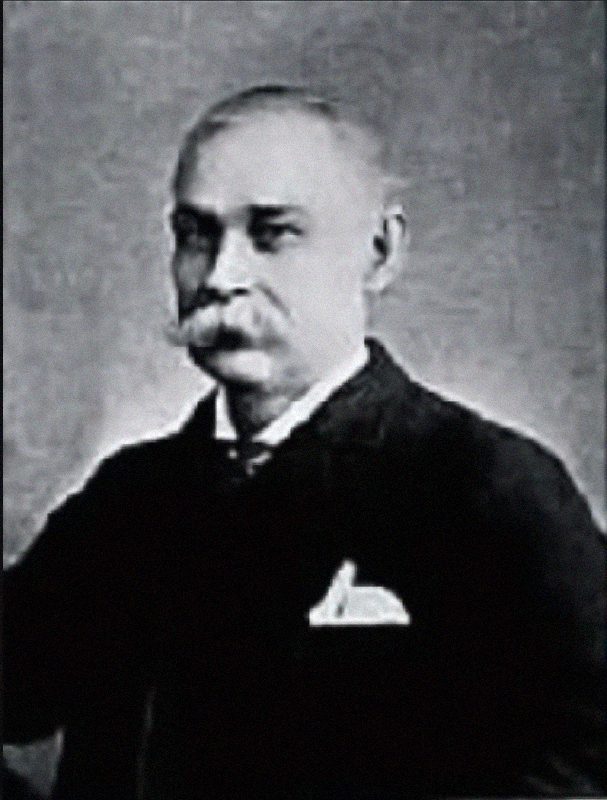
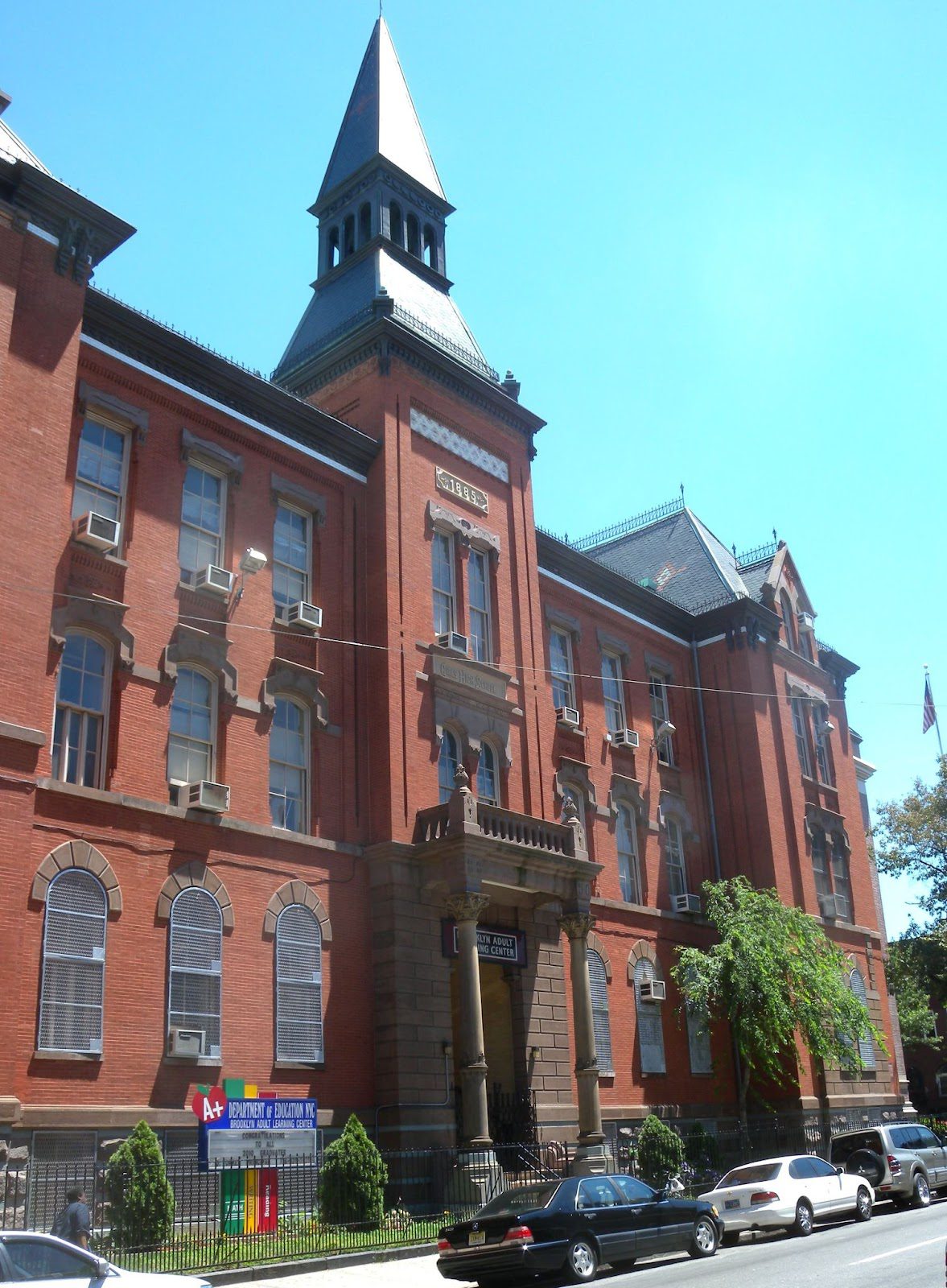
Few Brooklyn residents likely know or have even heard of J. Naughton. However, it is quite probable that every day, Brooklynites pass by one of his beautiful buildings. Naughton came from Ireland when he was eight years old. After practicing in Milwaukee, he became an architect. Then he studied at the Cooper Union. In 1879, Naughton became a building inspector for the Brooklyn Board of Education. He built over one hundred buildings, including the first Girls’ High School. The structure is considered a masterpiece of Victorian Gothic architecture, incorporating elements from Renaissance and French Second Empire styles. The influence of the Second Empire can be seen in the mansard roof, while pointed arch windows have a Gothic style. Two pavilions, in separate wings, were built around the central entrance that rises into a tower.
The school was located at 475 Nostrand Avenue. It should be noted that this school is the oldest preserved building among such educational institutions. It was a high school in New York. An interesting fact is that the girls’ school was meant to become a new facility for boys and girls. However, it became overcrowded. Therefore, it was decided that it would be an all-girls school. The boys had to wait a couple of years for a new school.
No clubs, no games, no dances
Initially, there were no extracurricular activities at the school. There is a known incident where two girls were almost expelled because they were caught dancing. Only in 1902 did the school allow clubs for its students.Besides the strict rules, girls could not read fiction on weekdays and could not borrow books from the library. Speaking was also forbidden in the building. They were allowed to talk during breaks and lunchtime. This cannot be compared to modern schools.
The boys’ high school opened on November 1, 1891. The building looks more like a castle than a school.
In the spring of 1896, a scandal erupted between the two schools. A group of girls from the girls’ school was talking to several boys on the corner of Nostrand Avenue. However, back then, girls and boys could not freely converse with each other in public. It so happened that Principal Patterson heard “improper conversations” and became so angry that punished the entire school.
The merger of the two schools
Patterson locked the school and told the girls to dine only inside the facility. Nobody could leave the campus without permission. Additionally, all the girls were forbidden to flirt with boys, which, in the principal’s opinion, was necessary to ensure a “more respectable future.” After this, The Times published an article titled “Brooklyn school girls angry: They were said to have been forbidden to flirt.” After the publication, the Principal did not lose his composure. He said that he locked the girls so that they did not get hit by trolley cars. He also said that he wanted the cloakroom to be safe from the thieves.
The last working day of Girls High School was on June 25, 1964. In the fall of 1974, the girls’ and boys’ schools were merged. A new institution was opened in February 1976 at 1700 Fulton Street. Today, Brooklyn Academy is housed in a boys’ high school, while in the girls’ school, adults receive education. Lena Horne, Lillian Tashman, Florence Eldridge, Isaac Asimov, Norman Mailer, Alan King, and Shirley Chisholm are among the famous graduates of the school.