

Julius Ashkin was the brother of Nobel laureate Arthur Ashkin. However, unlike his brother, who focused on optics, Julius was an expert in experimental and theoretical physics, known for his contributions to the development of particle physics. He was a brilliant student. Having skipped several grades in elementary school, he earned a Ph.D. in physics from Columbia University at the age of 22. During World War II, he worked on the atomic bomb in Los Alamos, and after the war, he taught at the University of Rochester. Later, he became the head of the Physics Department at Carnegie Mellon University. Read more about his life at brooklyn1.one.
Education at school and university
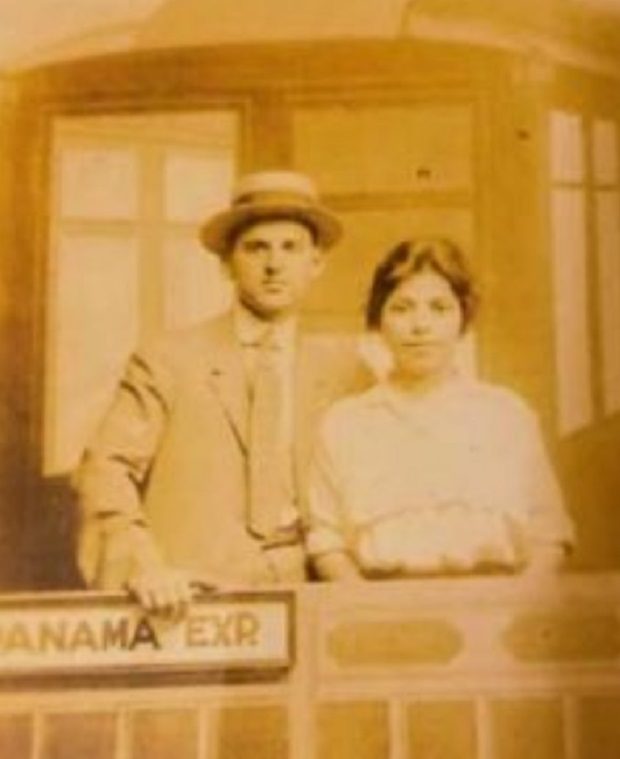
Ashkin was born in Brooklyn in August 1920. His father immigrated from Odesa, and his mother was from Galicia. Ashkin studied at James Madison High School in Brooklyn, which he completed in 1936. After high school, he got a scholarship and enrolled at Columbia University, where he studied from 1936 to 1943. Among the physicists working at the faculty were professors Fermi, I. Rabi, H. Bethe, E. Teller and Willis Lamb. All of them became prominent scientists. Fermi, Rabi, Bethe and Lamb received the Nobel Prize.
As a student, Ashkin joined the mathematics society. He became a teaching assistant and began working on his master’s degree. A year later, he started working on his doctorate under the guidance of Willis Lamb. Even as a graduate student, Ashkin wrote articles on astrophysics and statistical mechanics. Two papers on statistical mechanics he wrote with Lamb and another one with Teller. His article, “Statistics of Two-Dimensional Lattices with Four Components,” was very popular among his colleagues. In 1943, Julius earned his Ph.D. from Columbia University. There, along with Teller, he developed a model for the interaction of spins, the form of angular momentum transmitted by elementary particles on a crystalline lattice.
Manhattan Project
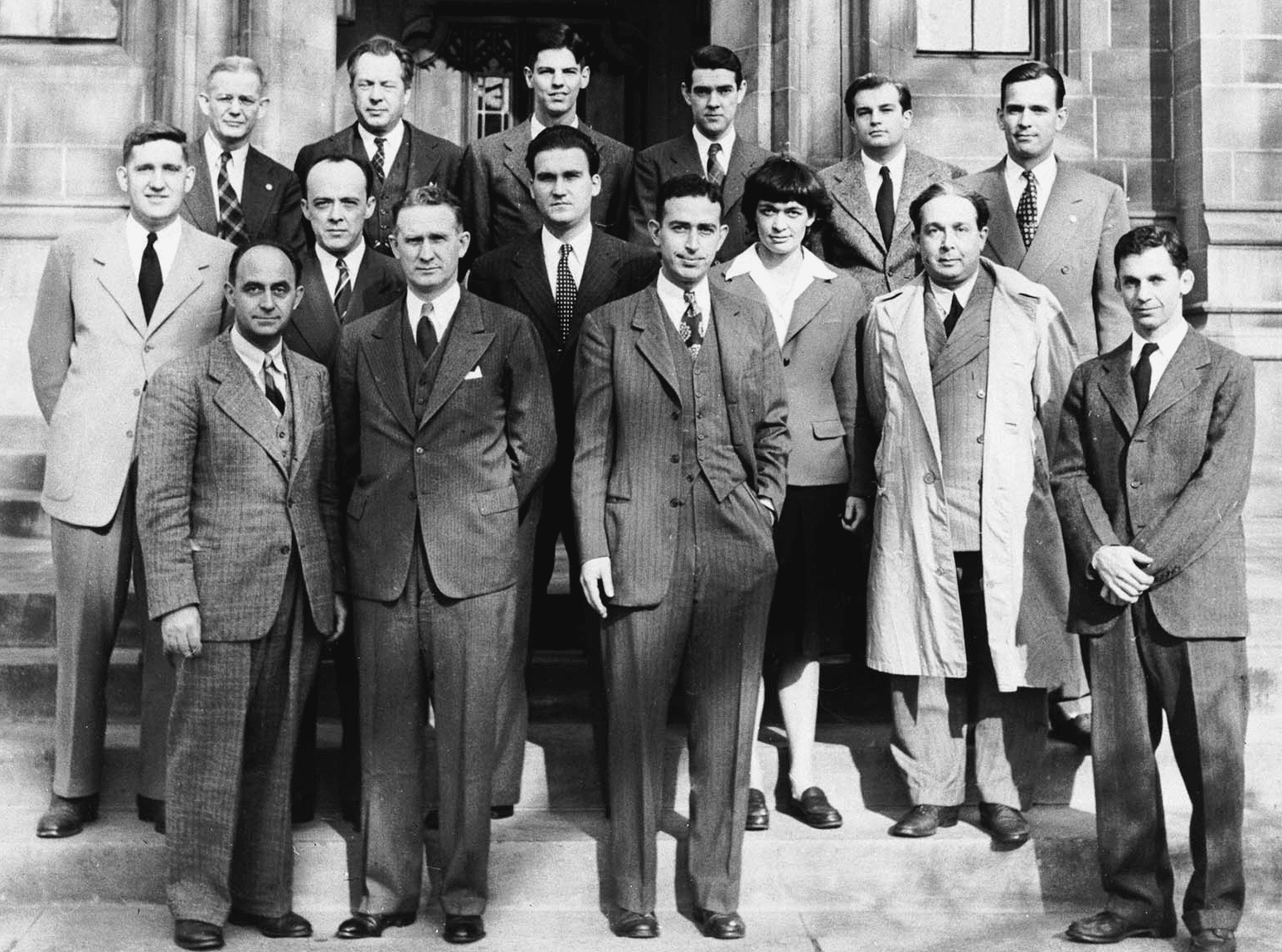
When Ashkin joined the Manhattan Project, he was still writing his dissertation. By the end of 1942, he was working in Chicago at the Metallurgical Laboratory of the University of Chicago. The scientists there tried to create the first controlled chain reaction using a nuclear reactor known as Chicago Pile. They built the reactor in an abandoned squash court at the old football stadium.
In 1943, Ashkin moved to Los Alamos to work in Hans Bethe’s Theoretical Division. The Met Lab consisted of two subdivisions. Fermi, Anderson, Zinn, Kreutz, and Szilard were members of the physics department, while Bethe and Teller were part of the theoretical division.
Although Ashkin was more suited to the theoretical division, he worked in the physics department called “Nuclear Physics – Experimental.” Along with Feld, he prepared a report that examined the energy potential of prolonged nuclear reactions, as well as radiation poisoning and other hazards.
In 1950, Ashkin started working at the Carnegie Institute of Technology. In 1953, he co-authored an article with Bethe that analyzed the energy loss of particles and radiation as they passed through matter.
Later, he conducted experiments with unstable subatomic particles, known as pi mesons, using the Carnegie Mellon synchrocyclotron. In 1958, he carried out experiments on the decay of pi mesons using CERN’s synchrocyclotron. He served as the chair of the physics department at Carnegie Mellon from 1961 to 1972.
Achievements of the scientist
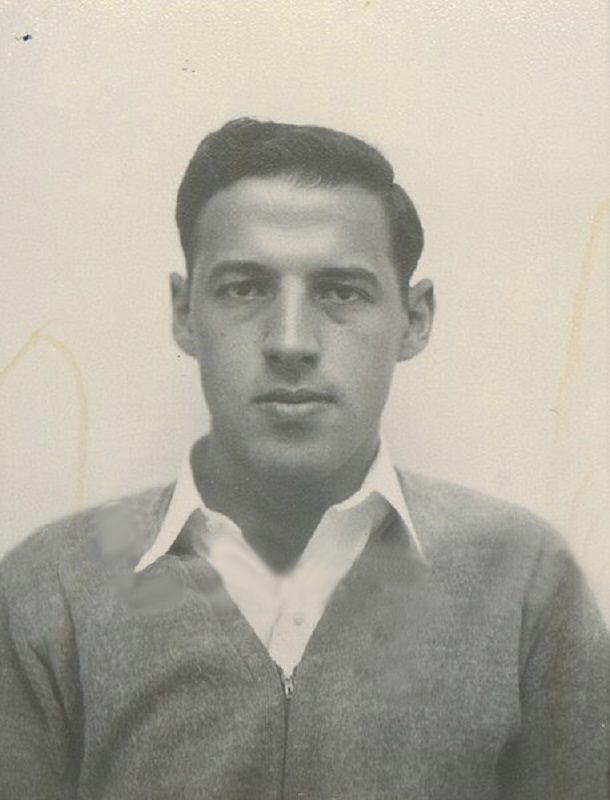
After he died in 1982, he was survived by his wife Claire and two daughters, Beth and Laura.
Ashkin, a renowned scientist in both theoretical and experimental physics, is recognized for three major achievements. His first accomplishment is considered to be a detailed theoretical analysis of particle and radiation interactions as they pass through matter. He did this work with Bethe in 1953, who received the Nobel Prize in Physics in 1967.
Ashkin’s second major work involved experiments with unstable particles, specifically pi mesons, at the university’s synchrocyclotron, a device used in atomic research that imparts positive and negative charges to such particles.
His third significant contribution to science was an experiment with colleagues from the International Laboratory in Geneva on the decay of pi mesons.