

The Brooklyn Public Library (BPL) is a system of public libraries in Brooklyn. It is the sixteenth most visited largest public library in America. Similar to two other public library systems in New York, it is a non-profit organization financed by the city, state and federal governments, as well as private sponsors. Read more about the history of the creation of the Brooklyn Public Library’s branches at brooklyn1.one.
The Carnegie Foundation
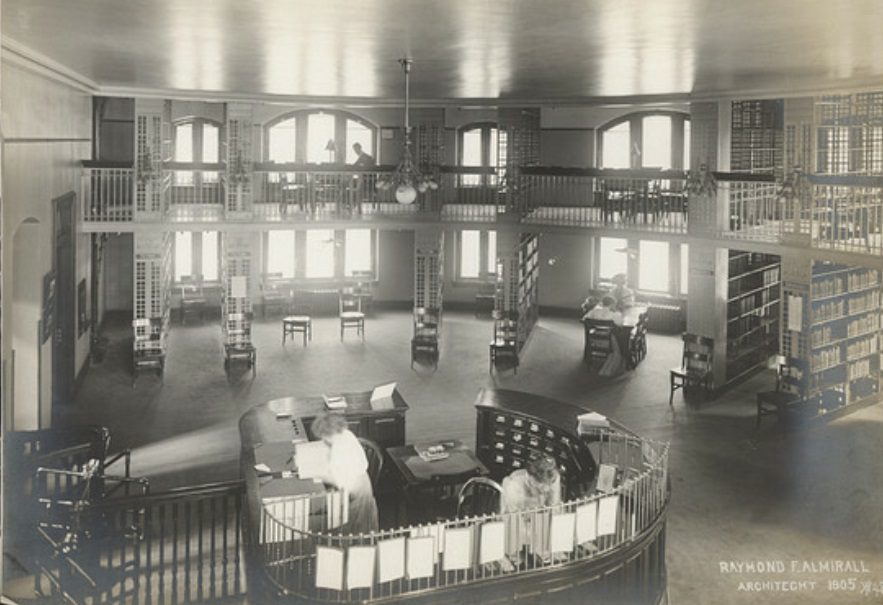
The opening of the Bedford Library in 1897 marked the beginning of the history of the Brooklyn Public Library’s branches. Later, the Bedford Library was relocated and became a prestigious Carnegie branch. This distinction extends to the Pacific location of the institution. At the end of the 19th and early 20th centuries, Carnegie helped build over 1,500 libraries in the United States. He funded 21 branches in Brooklyn, many of which, although not all, work today. The Bedford Library, the founder of BPL, opened on December 20, 1897, in the old P.S. 3 building on Bedford Avenue. It was a one-room school that started working in 1843. Over the years, the library changed several locations before settling in a new spot in 1905. This place was financed by Andrew Carnegie in 1905. Since then, the library has provided its services to visitors in its magnificent building on Franklin Avenue and Hancock Street.
The next Carnegie branch and the first to open specifically in Brooklyn was the Pacific Branch. It opened its doors on October 8, 1904. Famous Eastern Parkway and Park Slope branches were designed by architect Raymond Almirall for the BPL system. But that happened later.
One of the newspapers described the children’s room on the second floor as “the most fully equipped room for children in the country, with tables and chairs specially designed for the little ones.” A rotunda with an inner iron balcony, elaborate woodwork, doors, doorways, arches, a tiled fireplace and wooden panels were some of the other highlights. Despite all this, the new library encountered problems. The building of the BMT subway system caused structural damage in 1914. In 1917, all children’s books and one-third of adult books were destroyed by water used while extinguishing a fire. In the 1930s, workers from the WPA created a big mural on the second floor. But it was not preserved. The building was to be demolished after another fire in 1973, but joint efforts of public activists and the Brooklyn Public Library saved it.
A small collection of natural history books
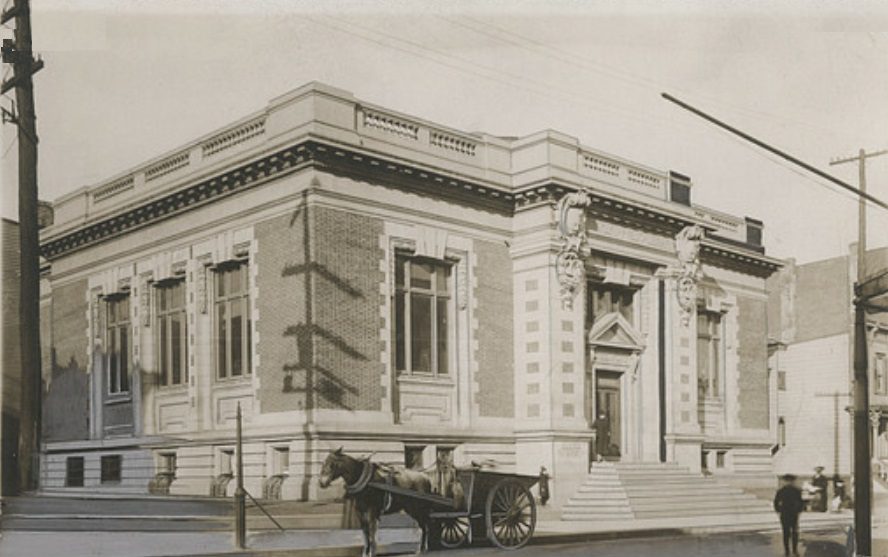
Park Slope Library began its history from a small collection of natural history books in the Litchfield mansion on Prospect Park. Soon after, a library with display windows opened on Ninth Street. Later, in 1906, a beautiful building was opened on 6th Avenue, funded by Andrew Carnegie. The Brooklyn Citizen described this branch as “magnificent” and “the most pretentious” among Carnegie’s other libraries. The interior of the branch is the embodiment of elegance of the early twentieth century. It features stained glass arches, columns, an arched ceiling made of glass and two tiled fireplaces. Following the 2012 reconstruction, the historic building now includes a ramp, doors and an elevator that conforms to ADA standards, as well as 24 computers and a new room for meetings and programs.
The South Branch, built in 1905 at the corner of 51st Street and 4th Avenue in the modern Sunset Park district, is one of the lost unique gems. In 1970, the building was pulled down because it was found to be too old. Soon, in 1972, a new branch opened on its site to visitors. The modern branch in Sunset Park may not be as highly valued architecturally as its predecessor in the Classical Revival style. However, it meets the design requirements set by its time. By the way, Carnegie promised to open an institution on the same site, and he did it. Another library in the Classical Revival style that was lost in time and fell into decline was the Greenpoint Branch. The Greenpoint Star praised the building, opened in 1906, for its “tasteful simplicity.” But it was doomed to an unfortunate fate as well, being demolished in 1970. However, a new library quickly opened in its place, just like the former South Branch did.
Mediterranean Revival architecture
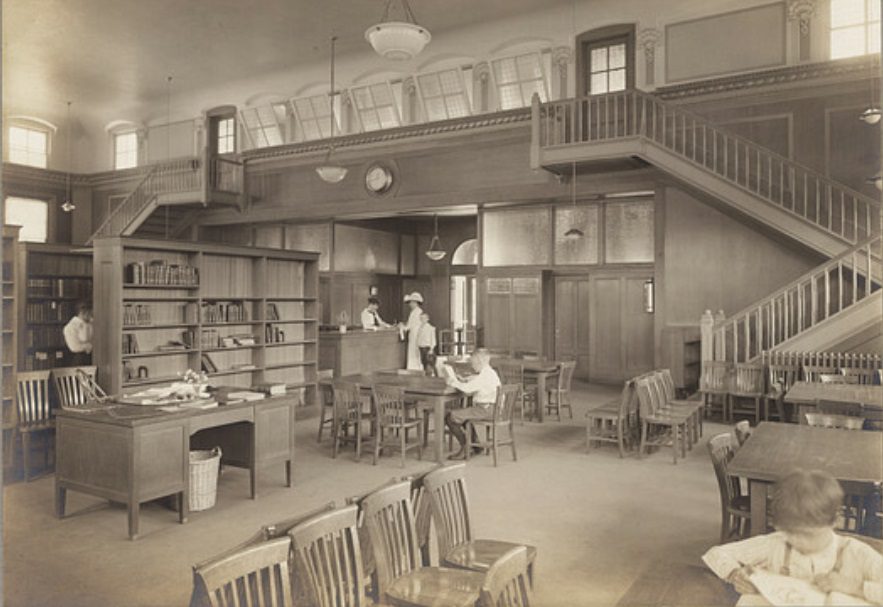
The loss of the Red Hook library was the greatest tragedy among all the lost branches. It was opened on April 22, 1915, and was the only Carnegie library in Brooklyn designed in the Mediterranean Revival style. The operation of this beautiful building ceased in August 1946 because it was heavily damaged by a fire. It was demolished after that. The architect R. Walker highlighted the interior of the building by incorporating decorative wooden stairs, pendant lamps and windows. Over the following decades, the branch worked in different places before landing on 7 Wolcott Street. Abraham Beame, the mayor of that time, officially opened a new one-story brick building on March 20, 1975.