

The Brooklyn Savings Bank was located in Brooklyn Heights, NY. It was designed by the famous architect from Brooklyn F. Freeman. Construction was completed in 1894. This building is an example of Freeman’s best works. Although the building had great architectural value, it was pulled down in 1964, just before the district was declared a historic landmark. Read more about the Brooklyn Savings Bank at brooklyn1.one.
A long story of placement
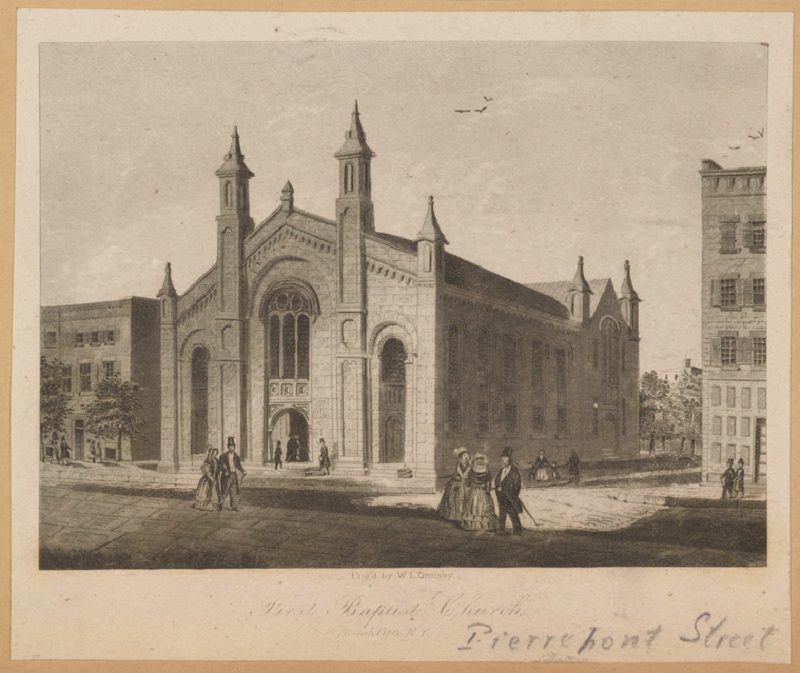
The Brooklyn Savings Bank was established in 1827 and initially functioned in the basement of the Apprentices’ Library Building at the corner of Cranberry and Henry Streets. In 1847, the bank relocated to a new building at the intersection of Fulton, Concord and Liberty Streets. After the Brooklyn Bridge was opened in 1883, city developers decided to create a grand boulevard leading to the bridge. As a result, part of the bank on Liberty Street had to be demolished, which forced the directors of the financial institution to find a new place.
The bank’s managers opted to house their institution at the northeast corner of Clinton and Pierrepont Streets in Brooklyn. At the time, this site was occupied by the First Baptist Church. The church parishioners refused to search for another place at first, but the sum of $200,000 made them change their minds. Therefore, the church was later demolished to make room for the future bank. The well-known Brooklyn architect F. Freeman was tasked with creating a building worth $300,000. Construction began in 1892 and was finished in 1894.
When Freeman was in the process of designing the bank, he had already established himself as a leading representative of the Richardsonian Romanesque style. In 1893, Chicago hosted the World’s Columbian Exposition, which displayed the neoclassical style. Freeman, like many other American architects of that period, quickly adapted to the changes. The Brooklyn Savings Bank became one of his first neoclassical projects. Even though he did not work with the new style before, the bank was considered one of Freeman’s best works.
Refinement of the neoclassical style
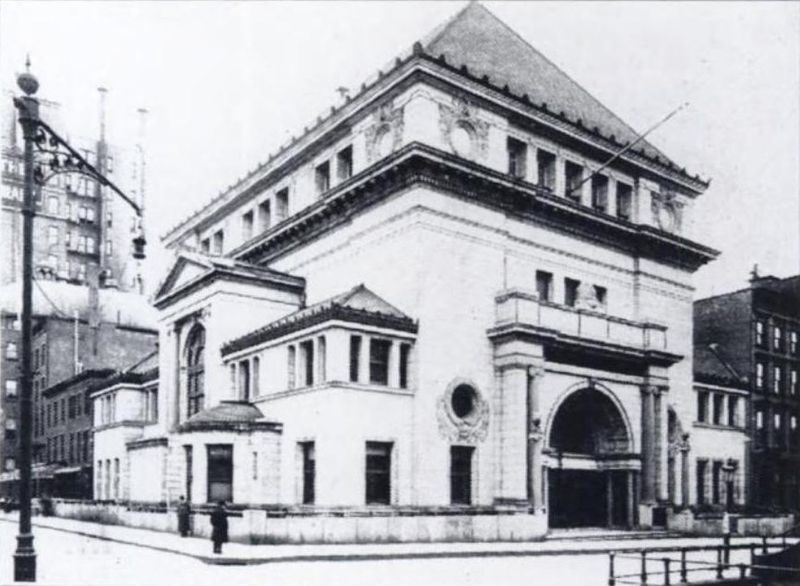
Granite from Hallowell was utilized as the permanent material in the construction. A majestic sunk porch measuring 20 by 25 feet surrounded by red granite columns and a solid Roman arch adorned the front entrance on Clinton Street. The bank’s name was carved into the entablature above the arch. The cornice featured the dates of the bank’s founding (1827) and the commencement of the building’s construction (1892) on two sides. There were two large round windows on both sides of the porch, which was topped with a small balcony. Three additional rectangular windows opened onto the balcony. There was also an entrance at 300 Fulton Street.
The side of the bank overlooking Pierrepont Street had a tall loggia crowned by a triangular gable supported by columns and flanked by transepts with stained glass windows. The bank’s private offices were located there. A large ledge of dark stone was above the loggia, which covered about two-thirds of the building’s height on either side. Above the ledge, there was a row of rectangular windows that were separated by a round window with a decorative border. The roof, duo-pitched and tiled, overhung the building from all sides. The overall appearance was described as a “mausoleum-like opulence.”
The interior of the bank was no less impressive. The main banking hall had a high ceiling that reached 75 feet tall. With this innovative approach to architecture, the bank focused on visual effects rather than practical use of space. The ceiling was adorned with a massive, rectangular dome and a clerestory, which was backed by eight Ionic columns made of Numidian marble. The bank’s walls were paneled with onyx up to a height of 22 feet. The counters were decorated with onyx and bronze. The mezzanine was used for keeping bank records. It also had a huge fireproof and antiburglar vault situated underneath.
Thus, the Brooklyn Savings Bank was the first and most prominent example of neoclassical architecture in Brooklyn Heights. That is why its demolition was regarded as one of the biggest losses in the history of NY.
Demolition of the bank’s building
The building served as the headquarters of the Brooklyn Savings Bank for almost 70 years. In 1961, the management made a decision to build a new main office at the corner of Montague and Fulton Streets in Brooklyn. Franklin National Bank bought the old building in 1963. Then it remained vacant for several months. At the end of 1963, Franklin National stated that they were going to sell the property to developers for reconstruction for commercial puposes. Fierce attempts by the community to save the historic building were in vain because it was wrecked by the destroyers in early 1964.
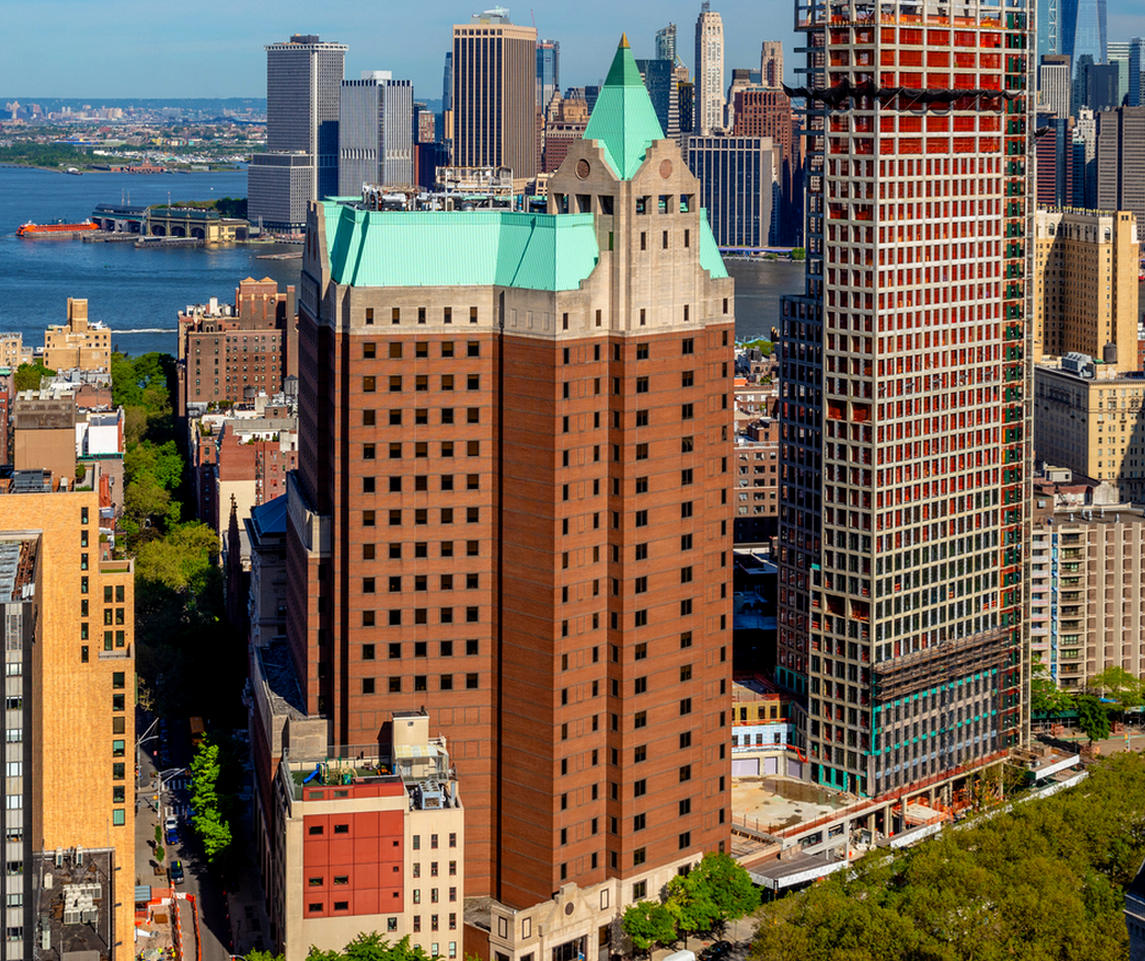
The loss of the bank and other landmarks prompted the city officials to take measures and safeguard other structures nearby. In November 1965, the district was officially recognized as the Brooklyn Heights Historic District. Nowadays, One Pierrepont Plaza, an office building constructed in 1987, stands on the site of the former bank.