

In the nineteenth century, business in Brooklyn evolved from a mix of small shops to a major national manufacturing center, driven by industries such as sugar refining, chemical production, and building materials. it is clear that the borough’s industrial growth was fostered by its waterfront location and new infrastructure such as the Bush terminal and later the Brooklyn Bridge. All of this stimulated economic and industrial development and ultimately helped Brooklyn become one of the leading manufacturers of manufactured goods in the United States by 1880. For more details, see: brooklyn1.one.
Building Technology Heritage Library
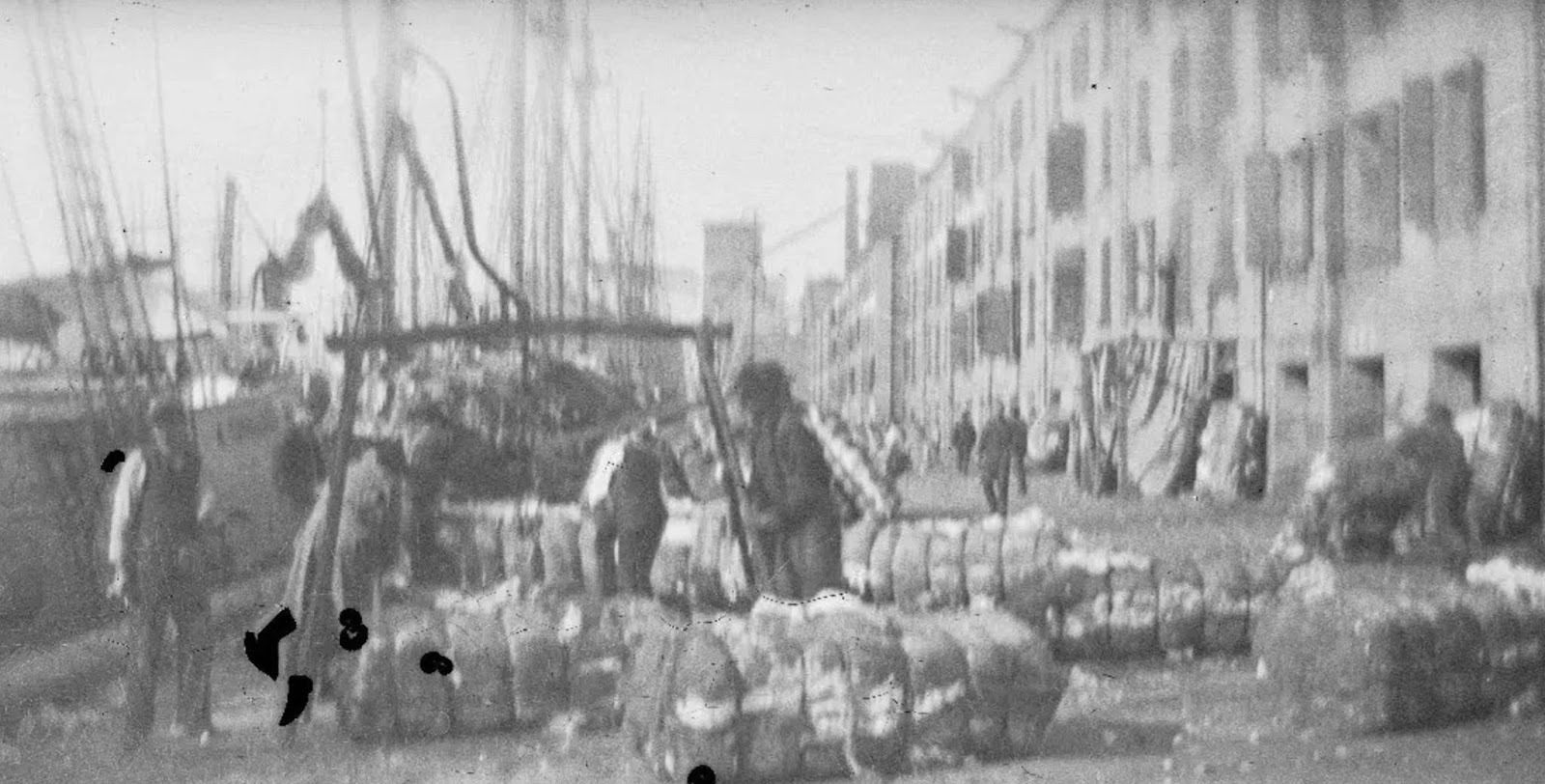
For some, Brooklyn may be known for its “hipsters” and as one of the boroughs of New York City currently experiencing a cultural renaissance, thanks to its many museums, sports facilities, and urban street life. However, a look at the Building Technology Heritage Library shows a very different side of Brooklyn. It is about the fact that it was the main manufacturing center in the Greater New York region. The Heritage Library contains publications from more than 100 Brooklyn companies that produced building materials, including wood, metal, and paint products.
These oldest Brooklyn documents date back to the mid-nineteenth century. For example, a catalog of building products on the eve of the Civil War illustrates the Victorian-era stucco moldings that adorned and still adorn many brownstone houses and other urban residential buildings in Brooklyn and even neighboring Manhattan. In addition, there is a so-called supplementary catalog. This is a booklet by a cast iron foundry devoted to the decorative cast iron posts and fences that framed the small front yards of classic Brooklyn houses surrounding these neighborhoods.
For example, the catalog of the Brooklyn Metal Ceiling Co. established at the beginning of the century features decorative metal ceiling panels, which are known today as tin ceilings, although they did not contain tin. They were available with a pre-treated finish imitating marble. This catalog reveals the ethnic diversity of Brooklyn, and the introduction is written in English, French, German, Spanish, and Italian.
It should be noted that it is quite convenient to study the development and diversity of business, business ideas, and the number of certain enterprises using such catalogs. After all, the records were kept carefully. And the number of such manuals was growing steadily, almost every significant business in Brooklyn had them. For example, a catalog of boron sheet metal that belonged to the Miller and Doing Co. which was founded in Brooklyn, but whose decorative sheet metal business adopted the experience of a company in Connecticut. Even today, the original stamping patterns are still used by the company in Missouri.
Manufacturing as a business model
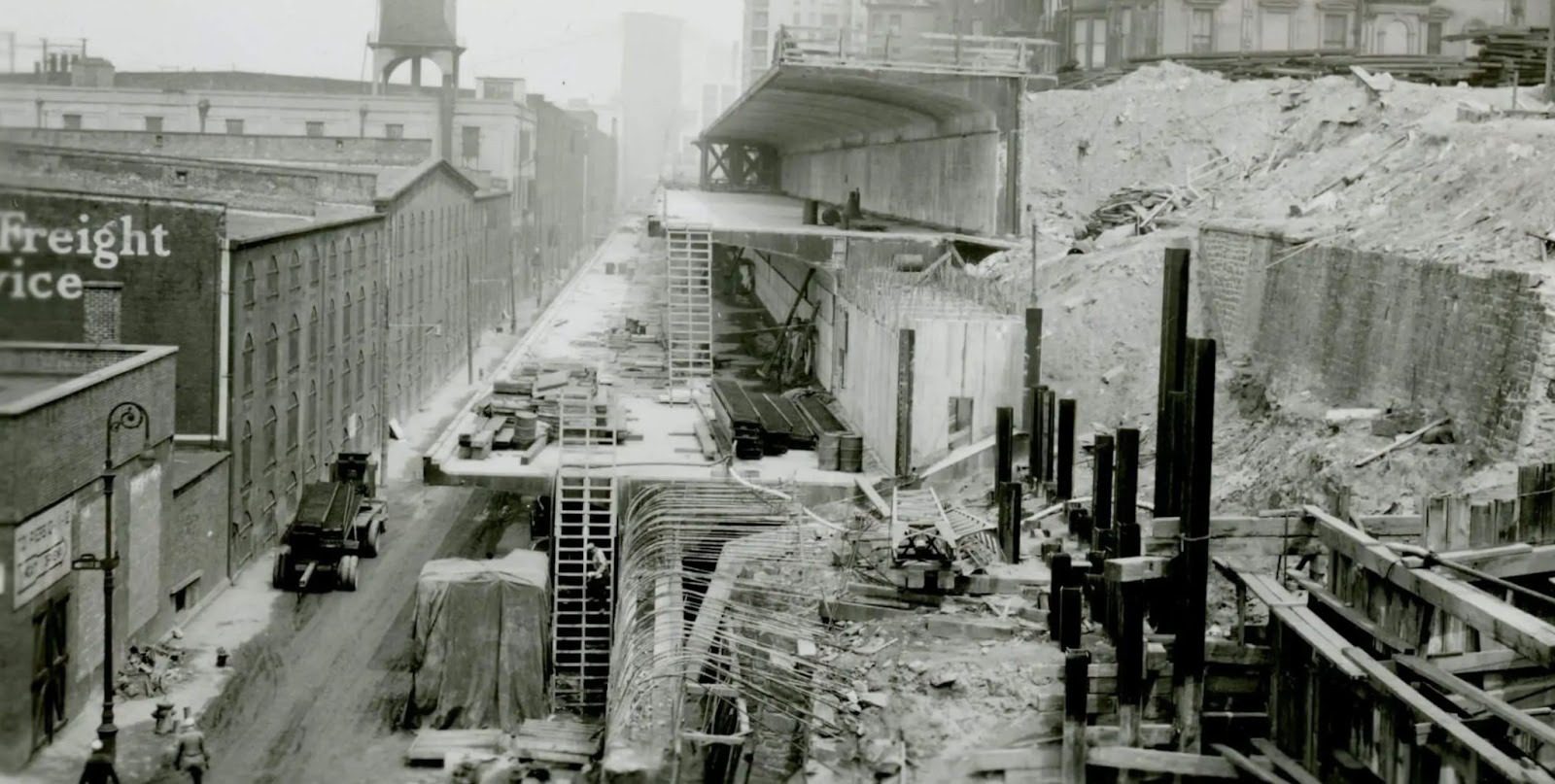
The history of Brooklyn stamped sheet metal, and by extension, this business, is quite rich. It was often used for decorative cornices and window caps on the facades of masonry buildings, as evidenced again by the Miller and Doing catalogs. Accordingly, patterns from Miller and Doing were used by the Kenneth Lynch Co. in Connecticut in the late twentieth century. Today, these patterns are still used to produce decorative sheet metal of that era by the WF Norman Co.
Brooklyn’s population made it one of the top five cities in the United States, so it is not surprising that such a large city had a significant manufacturing base as part of its economy in the nineteenth century. The Heritage Library’s documents show that for more than a century, a wide variety of products were manufactured here, which could be labeled with a special trademark – made in Brooklyn.
By the way, the title pages of such catalogs listed the range of available products. This is how Brooklyn-made glass was described: collette, sandblasted, beveled, silvered, ground, carved, and leaded art glass. This catalog also contained hundreds of different patterns and photographs demonstrating the various processes of decorative glass production.
Robert Fulton — the forefather of the transport business

Since Brooklyn’s founding, its residents have worked in a variety of professions adapted to the needs of their growing community. That is, from the nineteenth to the early twentieth century, Brooklyn experienced a period of tremendous growth and development. First it was a village, then it blossomed into a city, and then finally became part of the metropolis of New York.
This large influx of people from all over the world working, creating, and exchanging ideas had a major impact on the labor market and economy, including the emergence of professions such as photography. It also led to the decline of outdated industries such as ferryman.
Moreover, the decline of some once very profitable industries is also documented in the pages of catalogs. Cornelius Dirksen was a seventeenth-century farmer who owned a boat and transported passengers to and from Manhattan for a small fee. This entrepreneurial start to Brooklyn’s ferry service immediately led to a certain Robert Fulton launching his own ship in 1812. Since then, Brooklyn has had a regular, reliable ferry service that transported passengers, goods, and animals between the two cities. And all these different and numerous ferry companies, at the beginning of their work, brought profit to investors and created jobs for the population.
As for Robert Fulton, who greatly contributed to the rapid growth of the city, grateful descendants named Fulton Street after him. And in Fulton Park, there is a historic monument that commemorates his role in the transportation revolution in the region. Incidentally, there is something else that connects Robert Fulton to Brooklyn. We are talking about his steam-powered military ship, the Demologos, which is now moored at the Brooklyn Navy Yard.
Brooklyn Harbor
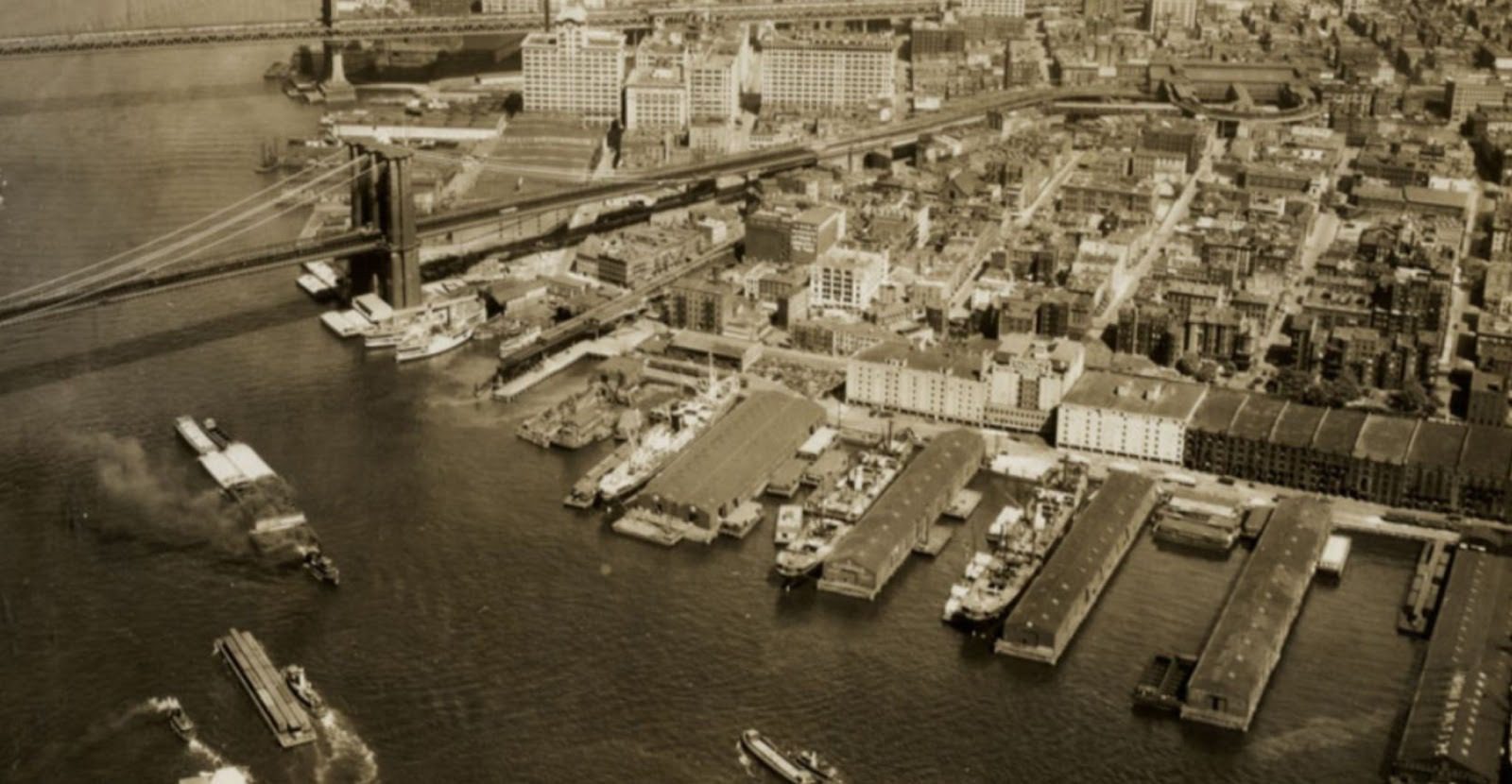
The Port of Brooklyn had a significant impact on the development of the city’s business climate. After the Civil War, the importance of Brooklyn as a port for shipping increased significantly. At the same time, the number of individual piers for shipping companies and the need for larger and taller stores increased. Not far from Brooklyn Heights, in what is now called Dumbo, in 1868, merchant David Dawes built his large warehouse for storing tobacco and later shipping it to Water Street.
Originally, this building had five floors and was designed, like all the shops along the coast, as long brick rooms with round arched doorways and similar windows. It was possible to close these windows and doors with heavy iron shutters to prevent light, moisture, and perhaps more importantly, unauthorized persons from entering the warehouse.
Inside, the building was divided into large compartments that could be accessed via a series of ramps leading to the upper floors. This huge complex could store a variety of goods from all over the world. Among them were animal skins and wool from Argentina, sugar and molasses from Puerto Rico, rubber from Belize, and palm oil from Liberia and Sierra Leone. There were, of course, also American goods destined for England and Mexico. Brooklyn was growing, getting rich, and doing business.
Sources:
- https://www.brownstoner.com/history/brooklyn-heights-east-river-warehouses-shipping-history/
- https://www.untappedcities.com/photos-inside-the-raw-spaces-of-a-19th-century-brooklyn-paint-factory/
- https://www.architectmagazine.com/technology/architectural-detail/made-in-brooklyn-a-glimpse-into-the-boroughs-manufacturing-history_o